- Home
- Learning in public
- Sense-making notes
- Taking a Walk In Quinn's Mind
- I Thought I Was Bad at Reading Diagrams… Turns Out, It Was the Design.
Brilliant !!
if this isn’t a win for me i don’t know what is… most times the beauty is in the details people don’t observe.
I was going to skip straight into the second chapter because i thought thats where everything will start uncovering
but i thought to myself…
if you want to really think like them you have to follow up with them. I don’t read books by the way, So Clark Quinn’s book will be the first of many I will be finishing hopefully In Sha ALLAH.
So I read the “How Does One "Learning Science"" chapter and oh my…
I'm glad i didn't skip that part…
But of course if I want to learn about learning science I should at least learn to read in between the lines.
This will help me especially when reading predator journals.
Here's some treats if you’re someone who designs learning experiences or even in any form passes down knowledge.
Clark Quinn was speaking about how there are some purely experimental studies, and most times the creation of hypothesis is validated, for true or null through tests.
For instance, someone may say, “Hmm, one prediction of cognitive load theory might be that we need to integrate labels into diagrams to keep people from generating more mental overhead by looking back and forth between them, trying to integrate the element and its meaning.” They run a test, and find out if it’s true (spoiler: it is).
Clark drops another Spoiler Alert : It's True Guys...
Reflecting on how this has impacted my experience with bad learning design, i wondered why i always hated tracing diagrams to labels written on another part of the page.
I wondered why i sometimes made mistakes even when tracing a body part to it's label and thought it was a me problem, little did i know that was the nature of my brain going through mental overload.
Now it all makes sense...
What does this imply that i do differently ?
On going, i'd keep my diagrams and labels integrated to eradicate my labelling approach being a contribution to the mental overload of my learners.
Again if you’ve been following from my last post i spoke about why most of what i did back in my university days of tutoring worked and still yet works…
Well now I know there’s a study that backs integration of labels into diagrams to keep people from having more mental overload.
Brilliant, if this isn’t a win for me i don’t know what is…most times the beauty is in the details people don’t observe.
But anyways, test it for yourself, there are a few examples of labelled diagrams side by side on the shared pdf.
Which stresses your brain the most when trying to connect the labels to the body parts ?
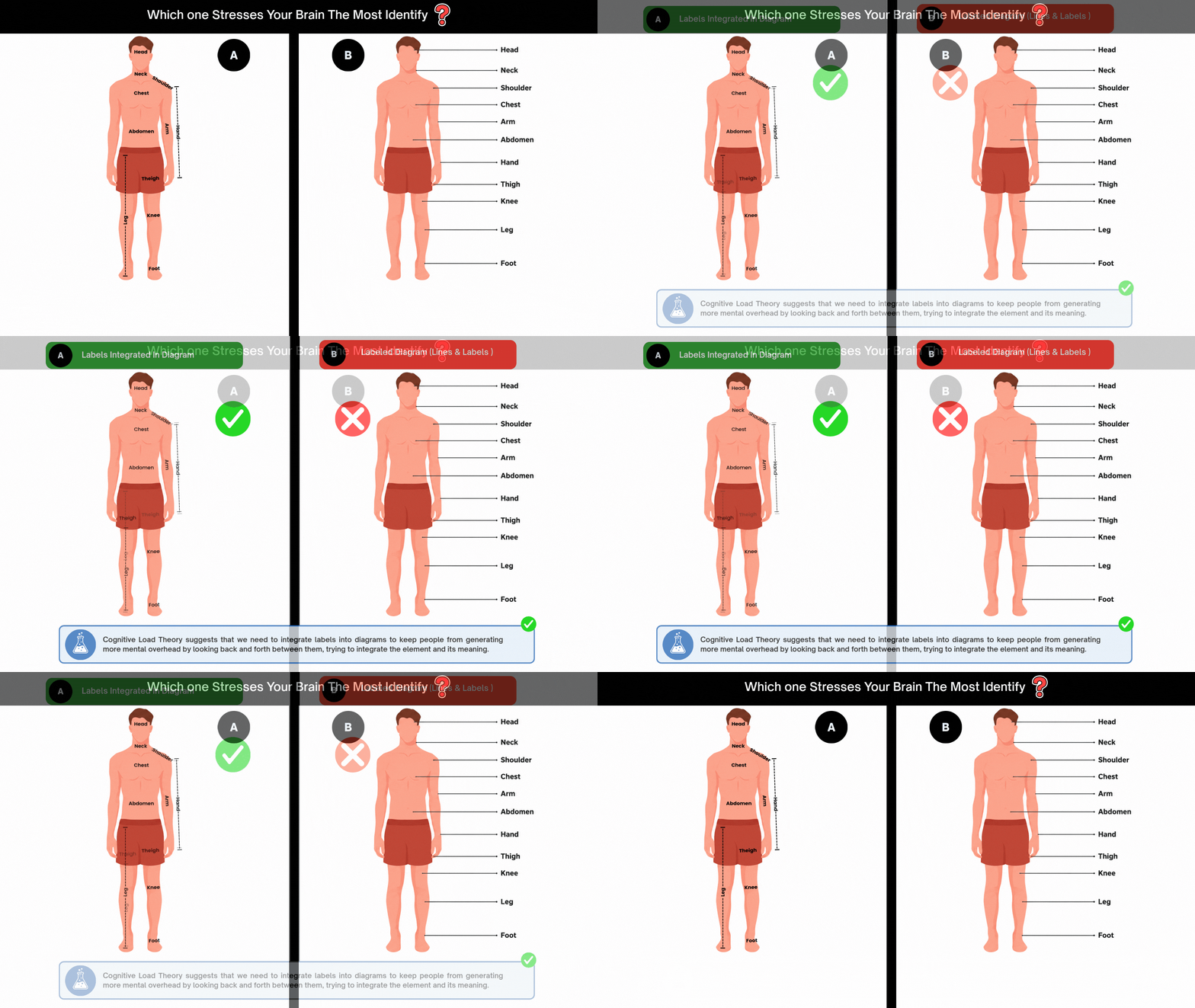
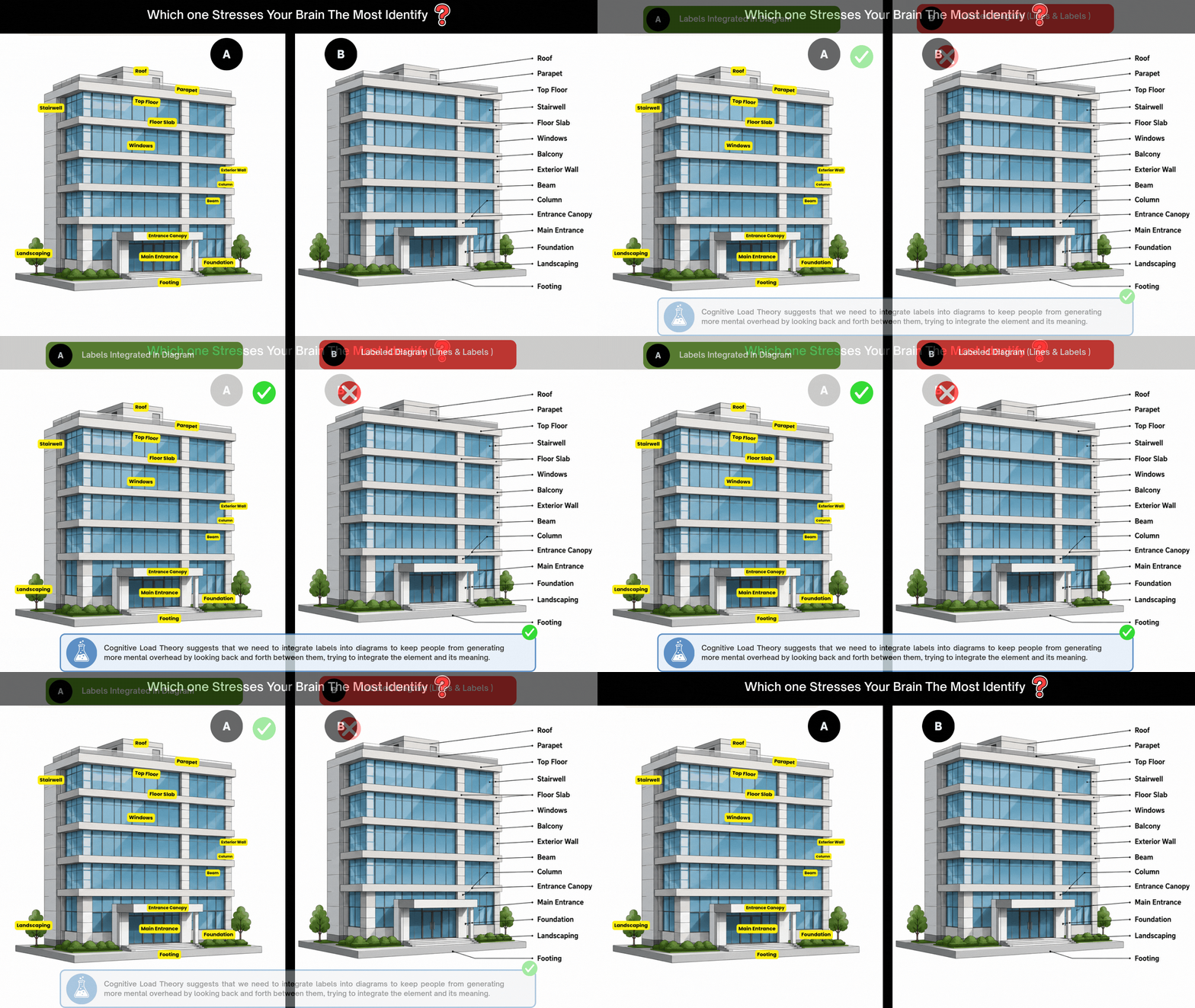
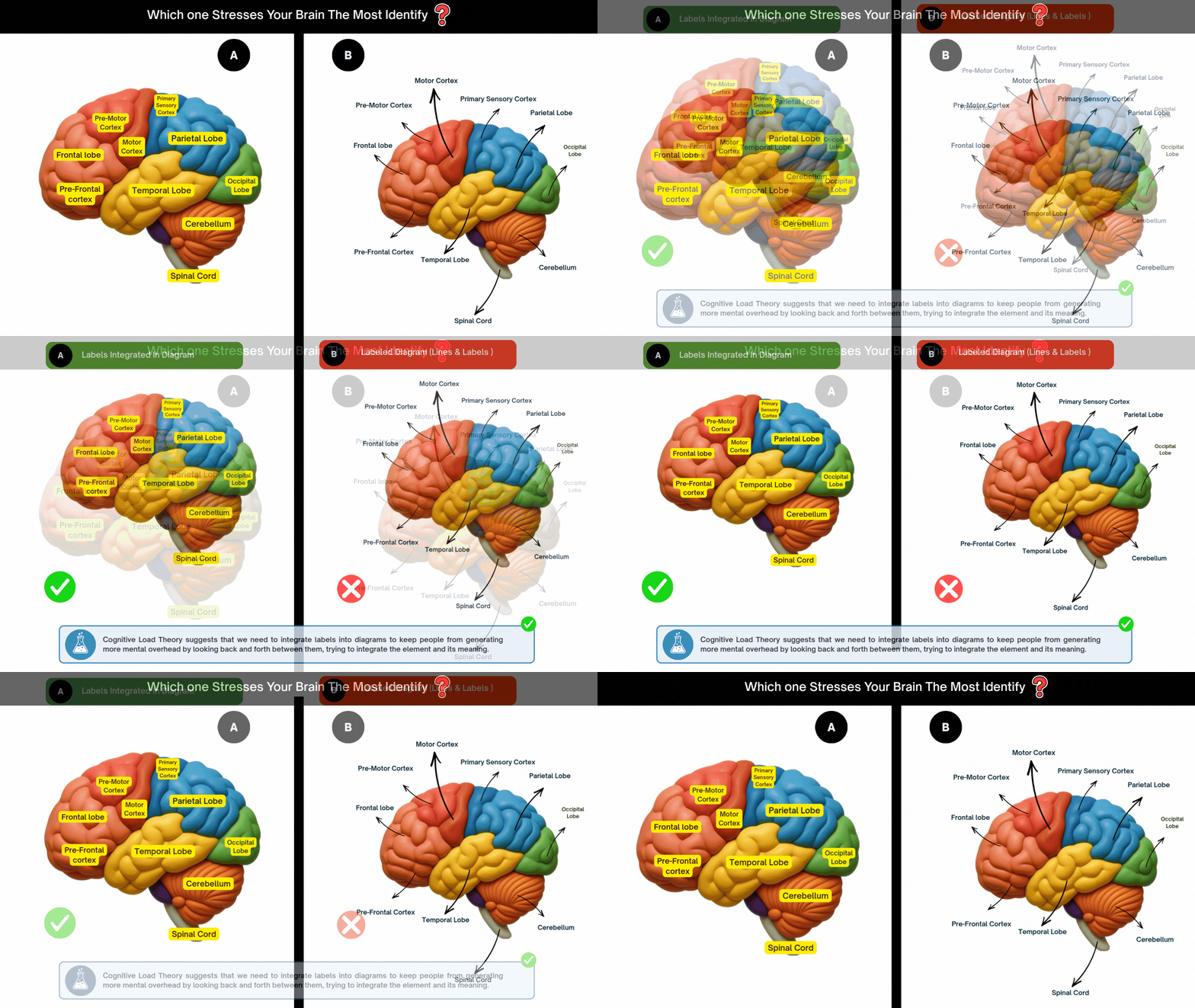
Thanks Clark ( you’ve clarified one of many).
Day 18 of Instructional Design
Where this comes from
- Learning Science by Clark Quinn — If you design learning, teach, or train people, you need to understand what is actually happening when someone learns. Learning happens at the neural level, but we design for it at the cognitive level. There’s a lot more in Clark Quinn’s book that I can’t share because of **intellectual property**. Get the book and experience the learning yourself. 📚You Would Love It!
Download the Cognitive Load Theory Diagrams Demostration (PDF)