- Home
- Learning in public
- Sense-making notes
- Taking a Walk In Quinn's Mind
Notes in this series
All sense-making notes- What If We’re Testing What Learners Remember Instead of What They Can Actually Do?

How do we design learning that prepares learners for real-world performance by aligning practice, automatic responses, and assessments with the decisions and actions they’ll need to make on the job?.
21 October 2026 - Learning Isn’t Complete Until It Shows Up in Action

How the learning loop moves from perceiving information in the environment through attention, working memory, and long-term memory to observable action.
17 October 2026 - Good Feedback Doesn’t Just Correct Performance. It Teaches Learners to Correct Themselves.
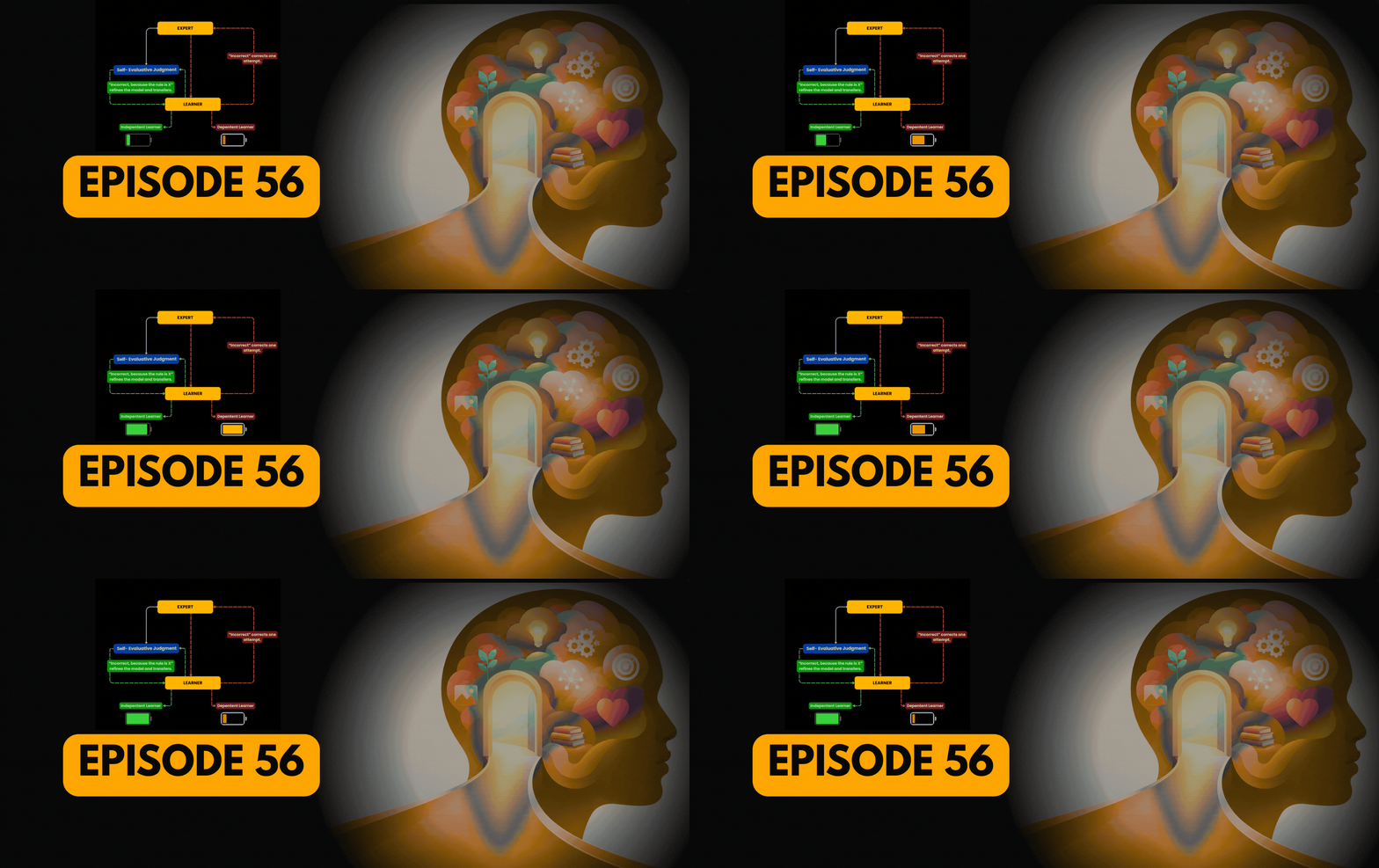
How meaningful feedback refines declarative knowledge, develops learners’ evaluative judgment, and enables self-correcting practice without continued dependence on external guidance. It also explores why automation alone doesn’t guarantee expertise.
14 October 2026 - The Goal of Good Feedback Is to Make Itself Unnecessary

How feedback refines the learner’s declarative knowledge until they can evaluate their own performance and self-correct without depending on an external expert. It explores how instructional design can gradually transfer evaluative judgment from the teacher to the learner.
12 October 2026 - Practice Can Build a Skill, But Feedback Tells You Whether You’re Building It Right

How declarative knowledge provides the standard for feedback, helping learners identify gaps between their actual and desired performance. It explores how instructional design must connect practice with feedback to develop correct, reliable procedural skills.
12 October 2026 - One Experience Can Become a Learner’s Entire Forecast

How episodic experiences become prior knowledge that can shape expectations and why varied practice and multiple scenarios are necessary to prevent learners from overgeneralising an experience.
7 October 2026 - “I Know” Doesn’t Mean “I Can”: How Knowledge Scaffolds Skill

The relationship between knowing and doing specifically, how declarative knowledge can scaffold early performance, while deliberate practice and feedback are what develop procedural skill and eventual automation.
5 October 2026 - When Knowledge Meets Action: The “I Can” Knowledge

The difference between knowing something and being able to do something, while exploring how practice develops procedural skills.
3 October 2026 - One Experience Can Teach a Pattern, But Multiple Experiences Teach You When It Applies

How our existing concepts, experiences, and event patterns shape what we understand and remember and how they can also mislead us through Overgeneralisation in learning design,
2 October 2026 - “I Know” vs. “I Can”: Why Different Knowledge May Need Different Learning Experiences

An introduction to the difference between declarative (“I know”) and procedural (“I can”) knowledge,
1 October 2026 - What’s the Point of Saving Knowledge If Learners Can’t Withdraw It?

The gap between having knowledge stored in long-term memory and being able to retrieve and use it in real performance. The core question is: Are we designing learning to store or make knowledge usable
12 September 2026 - Multiple-Choice Questions Taught Me the Difference Between Recognition and Recall

Why the format of an assessment changes the kind of retrieval learners practise. The central question is: Are we asking learners to recognise an answer, or generate it from memory?, Does it match ?.
12 September 2026 - Learning Sciences and Banks Have the Same Problem

The relationship between storing knowledge and being able to retrieve and apply it when needed. The tension between engaging learning and accessible learning.
12 September 2026 - Elaboration: The Dot-Connecting Skill That Helps New Knowledge Stick

How new information becomes connected to existing knowledge instead of remaining an isolated fact. It explores elaboration as a “dot connection” process where prior knowledge becomes the foundation...
9 September 2026 - Chunking Isn’t Grouping Information. It’s Making Information Belong Together.

What chunking actually means beyond simply grouping information together. It explores how sensemaking, meaningful relationships, and learners’ prior knowledge can transform separate pieces of info...
3 September 2026 - How Much Information Can We Actually Ask a Learner to Hold at Once?
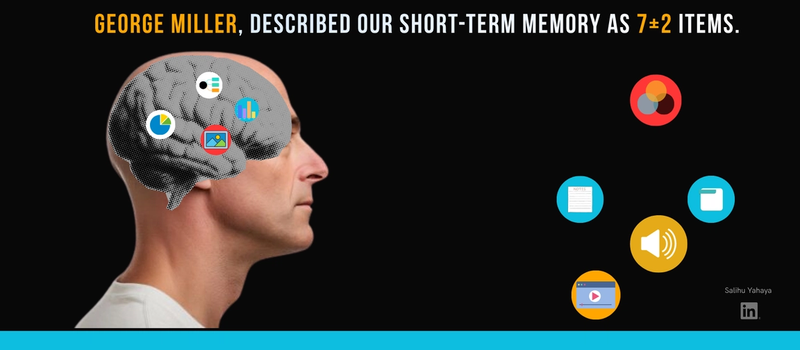
How attention moves information from the sensory store into working memory, and why working memory’s limited capacity matters for learning experience design.
28 August 2026 - A Distraction-Free Course Can Still Make Your Learner Look in the Wrong Place

The difference between removing distractions and actively directing attention. It explores how integrated labels, attention-guiding pointers, and sequencing can reduce unnecessary searching.
26 August 2026 - Don’t Reproduce Reality Before the Learner Is Ready for It
When to introduce the noise, stress, and complexity of real-world performance. It explores a progression: simplify → master → gradually replicate the performance environment.
26 August 2026 - Your Learner Can Choose Where to Look, But Can’t Control Anything Attention Grabbing

This works the tension between volitional and non-volitional attention: learners can deliberately focus, but salient cues can still pull their attention away.
25 August 2026 - Our Senses Don’t Ask for Permission Before They Start Processing
The difference between automatic sensory registration and the time-dependent nature of what enters through each sense. It explores why sight can provide a rapid snapshot while audio...
19 August 2026 - I Used to Think Sensory Gates and Channels Were the Same Thing. I Was Wrong.

The distinction between sensory gates (where information enters) and channels (how different types of information are represented and processed).
19 August 2026 - Your Learner Saw It. So Why Did It Disappear?

Why perceived information can disappear from the sensory store so quickly, and how attentional guidance helps learners select what matters before it fades.
19 August 2026 - Our Sensory Store Can Hold Almost Everything, But Only for a Moment

Introducing the sensory store as a high-capacity but extremely temporary inbox for incoming sensory information. It also explores why vision and audition receive particular attention.
18 August 2026 - Never Let Colour Carry Meaning Alone

How redundant cues can make visual information accessible when colour perception is limited. The core idea is that adding text, symbols, shapes, patterns, or other cues preserves the meaning ...
16 August 2026 - What Happens When Audio Becomes a Barrier to Learning?

How redundant pathways can prevent a sensory limitation from becoming a learning barrier. It focuses on carrying the same meaning through captions, transcripts, or visual cues when...
16 August 2026 - Two Questions Every Instructional Designer Should Ask About Accessibility

The progression from “Can the learner perceive the information?” to “What if that sensory pathway isn’t accessible to them?” It turns Quinn Seeds 1 and 2 into a simple design lens...
16 August 2026 - The Information Exists. But Does the Learner Have a Pathway to It?
The idea that perceivable information is not necessarily accessible information. It asks how instructional designers can create multiple pathways to the same meaning...
16 August 2026 - What If the Learner Can Perceive the Information, but Still Can’t Access It?

The idea that accessibility is more than making information perceivable; it is about providing another path when a learner cannot use a particular sensory pathway.
16 August 2026 - Are We Designing for Sensory Immersion or Sensory Fidelity?

The difference between making learning feel immersive and reproducing the sensory information that competent performance actually requires.
15 August 2026 - Don’t Design for More Senses. Design for the Sensory Information Performance Requires.

How to move from sensory immersion to sensory fidelity using the sensory channels that competent performance actually requires rather than adding senses simply to make learning feel realistic.
15 August 2026 - Learning Isn’t a Monologue. It’s a Conversation With the World.

How sensation and action form a continuous feedback loop between the learner and their environment. It’s refining the S.A.A.S. mental model from simply explaining information flow to...
14 August 2026 - Just Because a Sense Can Enhance Learning Doesn’t Mean We Should Design Around It.

When a sensory channel is actually worth designing around moving from “Can I use this sense?” to “Does this sense reliably serve the learning objective?”.
11 August 2026 - Maybe We Shouldn’t Just Add Audio to Learning. Maybe We Should Design Learning With Sound.
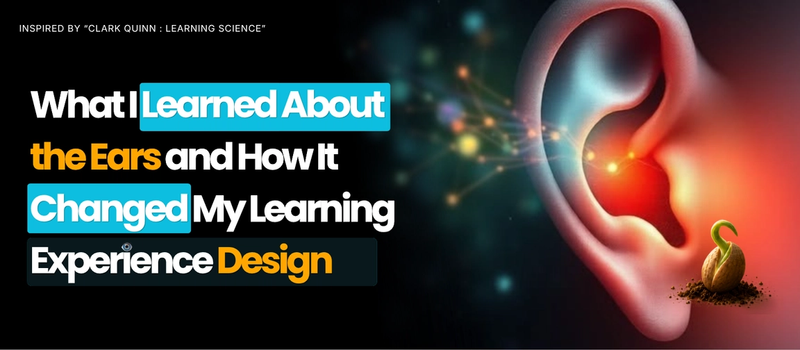
How audio can move beyond narration and decoration to deliberately train auditory skills especially in high-stakes environments where learners must detect, filter, and respond to competing sounds.
10 August 2026 - What If We Could Train the Ear for the Real World?
How can sound can move beyond narration and alerts to become part of realistic learning experiences especially by simulating the sounds learners may need to recognize in high-stakes environments.
9 August 2026 - If It Moves, Your Brain Notices. So Why Are We Making It Move?

This note is working out how the way our visual system detects motion, contrast, colour, and detail should shape the way instructional designers use visuals and animation.
8 August 2026 - Your Eyes Aren’t Just for Seeing. They’re a Gateway to Learning.

This short note is working out why vision receives so much of the brain’s processing capacity, and what that means for instructional designers when deciding what learners see and process.
7 August 2026 - You Can’t Avoid What You Never Detected

This short note is working out why detectability comes before perception, processing, memory, and application and why that makes it a foundational consideration when designing learning experiences.
7 August 2026 - I’m Choosing Understanding Over Finishing the Book.

discussing the tension between moving slowly enough to truly understand what you learn and moving quickly enough to feel like you’re making progress and why documenting, applying, reflecting...
4 August 2026 - Knowledge Is Only a Seed Until You Put It in the Soil. 🌱

How sensory input, attention, action, and the environment form a continuous learning loop and how that loop can be understood as a simple mental model: Stimulus → Attention → Action → Stimulus.
4 August 2026 - I Found the Brain's S.A.A.S.—And It's Not Software as a Service.

How sensory input, attention, action, and the environment form a continuous learning loop and how that loop can be understood as a simple mental model: Stimulus → Attention → Action → Stimulus.
3 August 2026 - I Thought All Our Senses Sent Information to the Same Place. I Was Wrong.

How different senses capture information in different sensory stores, and why what we see, hear, smell, feel, or taste initially remains represented in the same form in which we perceived
3 August 2026 - Your Senses Are the Gatekeepers of Learning.
How information from the outside world enters the learning system through our senses, and why understanding sensory processing matters...
3 August 2026 - I Understood “Neurons That Fire Together...” by Turning Neurons Into Employees.

Transform a complex neuroscience idea into something familiar enough to understand, remember, and explain using an office analogy make the concept accessible to other instructional designers.
2 August 2026 - “The Neurons That Fire Together, Wire Together” Finally Made Sense to Me.
Working out how to turn an abstract explanation of neural connections into a familiar mental model using an office analogy.
2 August 2026 - Maybe Performance Was Never the Starting Point.

Working out whether we’ve been thinking about the performance–well-being relationship backwards: does performance create well-being, or does well-being create the conditions for better performance?
30 July 2026 - Maybe We’ve Been Asking the Wrong Question About Performance.

Today i learnt about the connection between happiness, psychological needs, and performance, and whether our usual way of thinking about performance is missing something important.
30 July 2026 - Why Many Instructional Designers Unintentionally Give Away Their Seat at the Table

How instructional designers can establish the value of their expertise alongside SMEs by recognizing that expertise in content and expertise in how people learn are different.
29 July 2026 - Why I Won’t Design Learning at the Neuron Level
Here i put down my understanding of the neural infrastructure underneath learning, focusing on the cognitive processes designers can actually design for
28 July 2026 - The Most Useful Framework I’d Need to Remember as an Instructional Designer
If you're curious about how information becomes lasting knowledge and what that means for an instructional designer’s job beyond simply presenting information.
28 July 2026 - Learning Science Is the Foundation But the Foundation Is Still Evolving

Hop on this one with me to know whether “learning by doing” can become an excuse for inadequate formal preparation, especially when mistakes carry real costs.
27 July 2026 - Just Because It Makes You Better at the Game Doesn’t Mean It Makes You...

Join me as i explore how evidence should guide instructional design decisions instead of hype, and what kinds of game-based activities might actually produce meaningful transfer...
26 July 2026 - I’m Buckling Up for a Rollercoaster Ride Through Quinn’s Mind

I’m working out how to actively learn from Quinn’s book. Not just read it, by reframing, reflecting, translating ideas into design decisions, and documenting how my thinking changes along the way.
25 July 2026 - You Don’t Need to Read Every Journal to Keep Up With Learning Science

Understanding how an Instructional Designer can stay current with learning science without becoming a researcher.
25 July 2026 - I Thought I Was Bad at Reading Diagrams… Turns Out, It Was the Design.

This note is working out how learning science—especially cognitive load theory can improve the design of learning experiences, using integrated diagram labels as a practical example.
25 July 2026 - Instructional Design Is A Dynamic Field

This note is working out whether I can responsibly keep using old instructional-design foundations and evidence when the science behind learning keeps evolving.
24 July 2026 - Why Learning science?

I could do it. But I couldn’t explain why it worked.
23 July 2026 - Here's what I need to remember as an Instructional Designer if I want to stay relevant.

I’m working out how to move from “it worked before” to “I can explain why I designed it this way.”
21 July 2026 - The Beginning

How my journey all started on linkedin on the 20th of July 2026 around 01:15:35 AM
20 July 2026
Working through Clark Quinn’s short prescriptions for learning experience design one at a time, in my own words — what each seed actually asks a designer to do, and where I’ve already been doing it without knowing why it worked.
- Why Teaching the Knowledge Isn’t Enough: How Practice Turns “I Know” into “I Can”
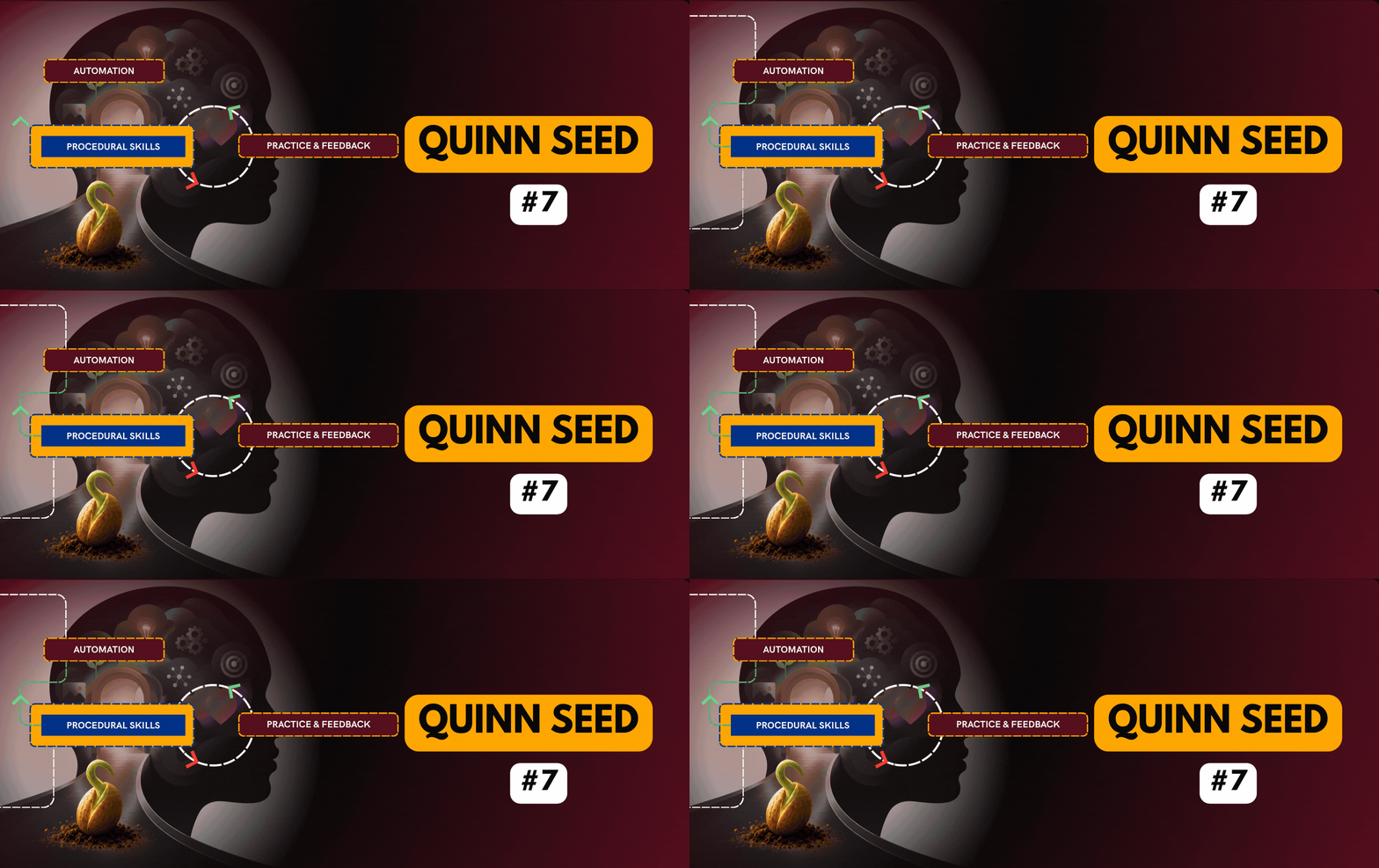
How declarative knowledge supports the early development of procedural skills, and how sufficient practice, feedback, and increasing automaticity free up working-memory capacity for learners to build increasingly complex skills.
9 October 2026 - Stop Choosing the Format. Diagnose the Learning First.

How to turn “match the instruction to the learning” into a practical design process moving from performance to knowledge to practice, and only then choosing the instructional format that addresses the actual learning gap.
7 October 2026 - Don’t Fill Working Memory. Equip It.
What information actually belongs in the learner’s head versus what can remain in the environment. It explores how chunking, prior knowledge, and context can help designers turn necessary info into...
7 September 2026 - Your Learner’s Working Memory Is a Desk. Stop Putting Everything on It at Once.

What working-memory overload really means: not simply too much information, but too many things the learner must mentally coordinate at the same moment.
31 August 2026 - A Clean Learning Experience Can Still Make Your Learner Look in the Wrong Place

Attention design is not just about removing distractions, it is also about directing attention toward what matters. It explores how to simplify first, progressively introduce realistic complexity etc.
26 August 2026 - What Happens When Learners Can’t Access the Information We Designed for Them?

Working out the sensory gap between making information perceivable and making it accessible. It explores how instructional designers can provide alternative pathways, especially through redundant cues
16 August 2026 - My Learners Can’t Remember What They Never Perceived

Where detectability fits into the learning process and, after the feedback, clarifying that instructional design begins with analysis, while perception is an early gateway in the cognitive...
6 August 2026 - We Don't Design for Neurons. We Design for the Thinking That Activates Them.

Why instructional designers should design at the cognitive level rather than the neural level and how existing knowledge acts like a learner's canvas.
3 August 2026