- Home
- Learning in public
- Sense-making notes
- Taking a Walk In Quinn's Mind
- Just Because It Makes You Better at the Game Doesn’t Mean It Makes You...
Just Because It Makes You Better at the Game Doesn’t Mean It Makes You Better at Thinking. 🧠
One of the Biggest, if not The biggest lesson brain games taught me wasn't about games, it was about instructional design.
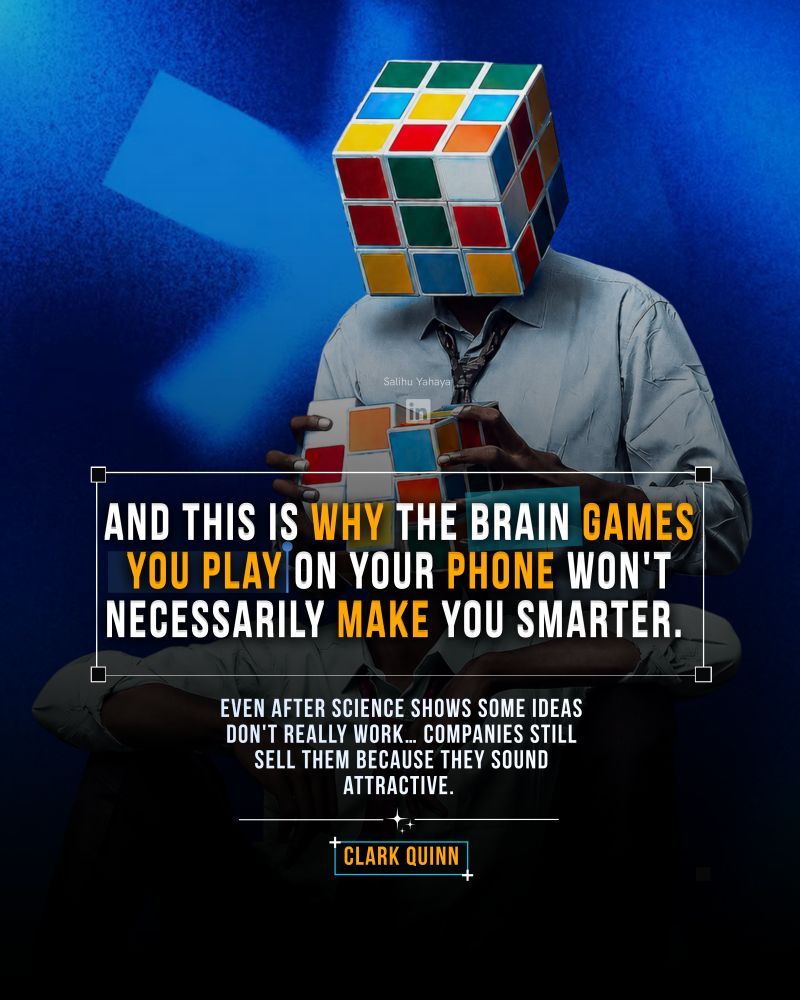
And This Is why The Brain Games You Play on Your Phone Won't Necessarily Make You Smarter.
You see when someone says an app will make your brain stronger, people are already thinking…
“WOW! I need that “, even before there is good evidence.
Clark Quinn says:
If research later shows something doesn't work...
We should stop using it.
Good professionals don't cling to ideas just because they sound impressive.
They follow the evidence.
"Yet... certain ones continue to be marketing draws..."
Even after science shows some ideas don't really work… Companies still sell them because they sound attractive. People keep buying them. Not because they're effective… But because they're easy to market.
The big lesson here for me is :
Clark Quinn is reminding us as instructional designers:
Not to choose learning methods because they sound exciting or are popular, But to choose them because research shows they actually help people learn and improve real-world performance.
But what if i have to go extra to do so ?
Well…
Guy W Wallace taught me something profound that helped me look at how i render my service properly to the human brain (The Learner) differently :
"Regardless of what the implications will cost me —be it extra slides, extra pages, or more effort— I should do what I need to. Caveat emptor—beware of buying into methods before buying into the evidence."
Because just as doctors and financial advisers do care about their patients and clients finance health, so should i as an instructional designer care about my learners brain
And just as doctors and financial advisers know better how to treat their patients and guide their clients investments, so should i as an instructional designer know how to expose and guide my learners on their knowledge and skill acquisition journey
And in one sentence Just because something makes you better at one activity doesn't mean it will make you better at everything else. Good instructional designers rely on evidence, not hype.
But Now i actually have a bothering question for Clark Quinn and it’s about the memory games cause i often play them not until recently.
What type of mind games design, may have the perceived sold value on the brain, and what type of activities should be designed around a game to yield the desired “Get Smarter or Better at solving problems (or a problem)“ as promised by most mind games if achievable Sir ?
Thank You
#InstructionalDesign #InstructionalDesigner #LearningAndDevelopment #LearningDesign #LearningExperienceDesign #LXD #Elearning #ELearningDesign #CurriculumDesign #CurriculumDeveloper #LearningJourney #Day1 #Day2 #LearningInPublic #BuildInPublic #SenseMakingNotes #MentalModels #TAWIQM
Where this comes from
- Learning Science by Clark Quinn — If you design learning, teach, or train people, you need to understand what is actually happening when someone learns. Learning happens at the neural level, but we design for it at the cognitive level. There’s a lot more in Clark Quinn’s book that I can’t share because of **intellectual property**. Get the book and experience the learning yourself. 📚You Would Love It!