- Home
- Learning in public
- Sense-making notes
- Taking a Walk In Quinn's Mind
- Just Because a Sense Can Enhance Learning Doesn’t Mean We Should Design Around It.
Just because a sense can enhance learning doesn’t mean we should design around it.
Like we once discussed about how our senses being the gateway of information going into our learning system.
As we think of the senses as input channels or gateways into the learning system.
Sight and sound are usually our most practical channels because they’re relatively easy to deliver consistently through controlled design choices.
For the Sight Gate, the closer we match our learning experiences to how vision actually works, especially detailed central vision and our highly sensitive ability to detect motion through our black and white periphery, the more effectively visual information can pass through the gateway.
Anything that unnecessarily distracts the eye can compete with the information we actually want learners to perceive.
The same principle applies to sound.
The closer we design the learning experience around how sound communicates messages, status, direction, and location, the more likely the intended information is to be detected and interpreted in the form we intended.
In other words:
Don’t just put information in front of the learner.
Design it for the gateway through which it has to pass—while respecting the sensory capacity and distribution revealed by the sensory homunculus.
We talk a lot about designing for the senses.
Sight.
Sound.
Touch.
And sometimes, smell and taste.
But here’s where it gets interesting.
Not every sense is equally useful for every learning experience.
Let me tell you a story.

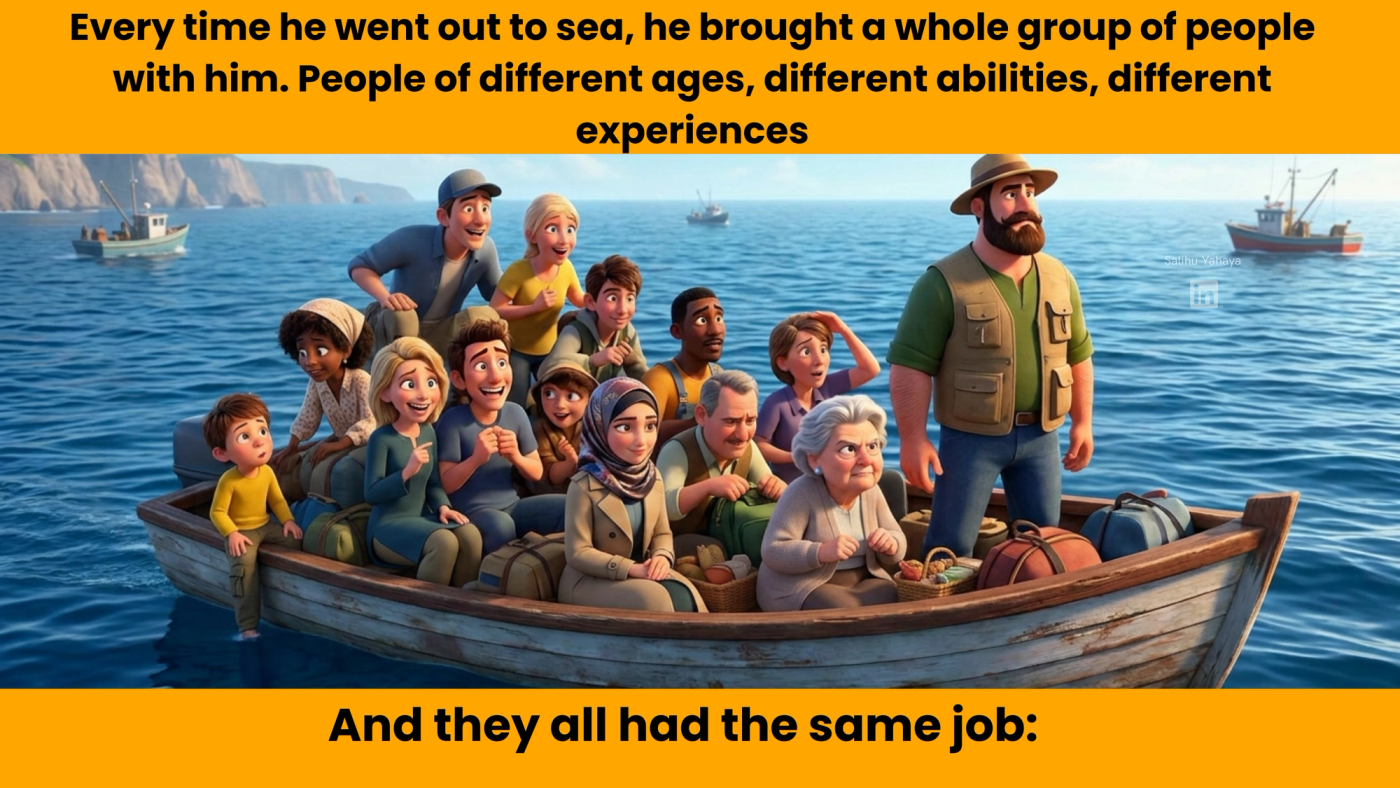
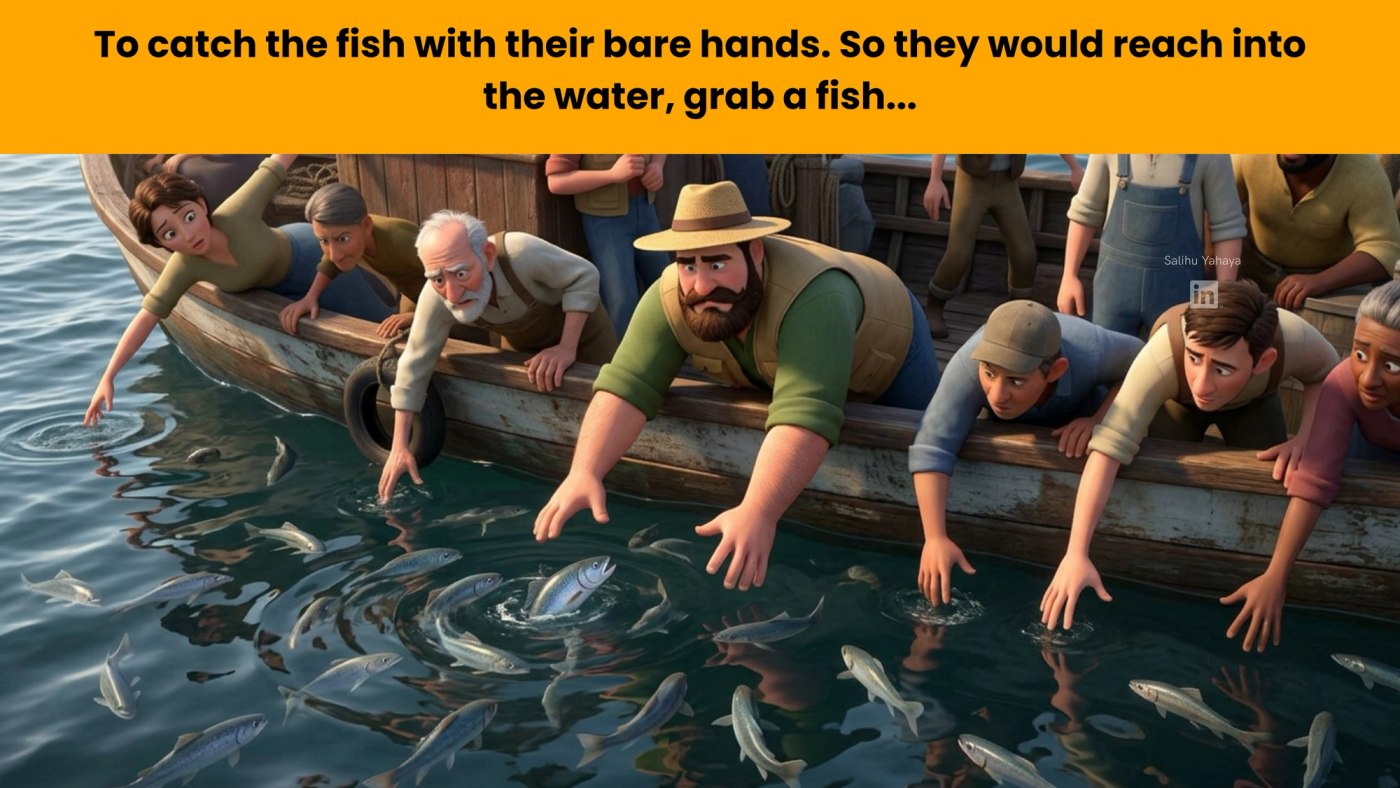
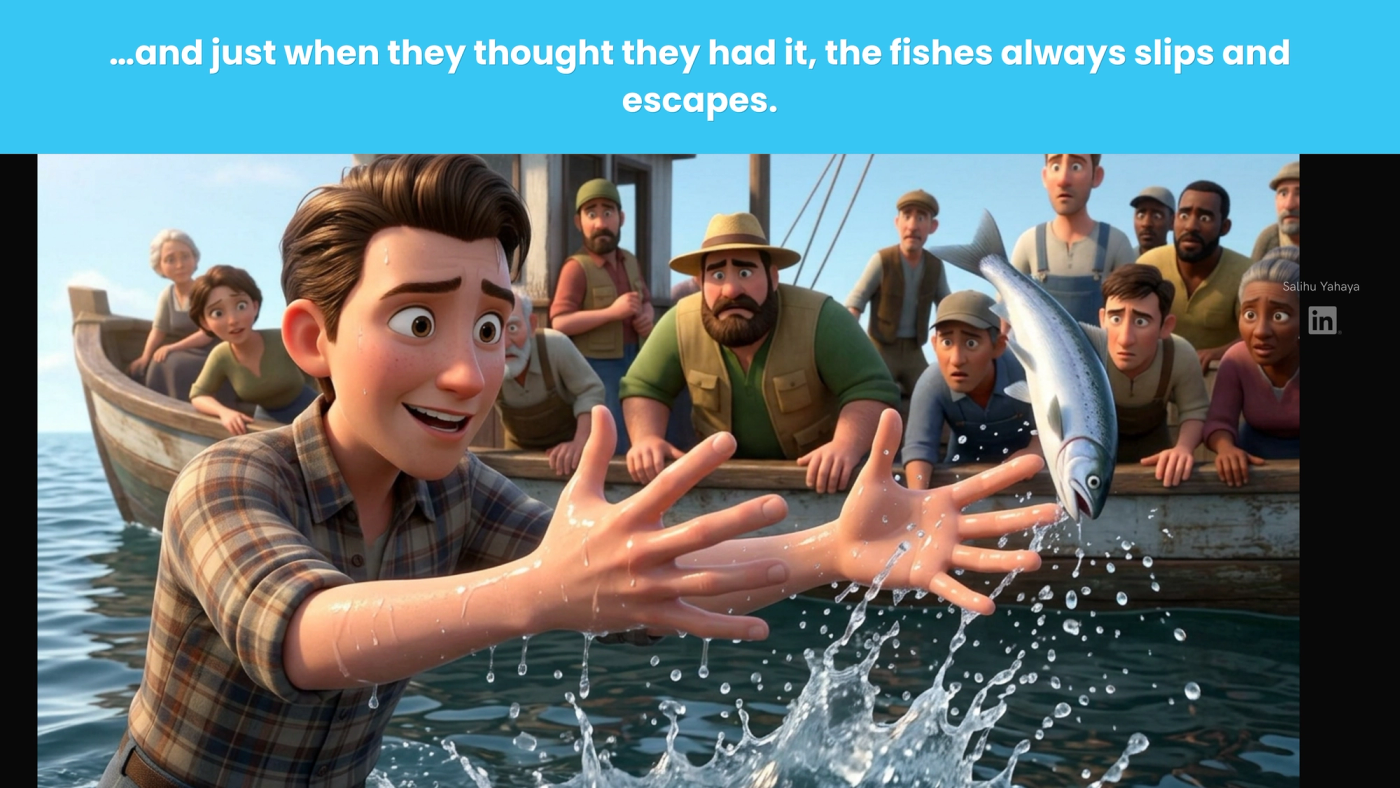

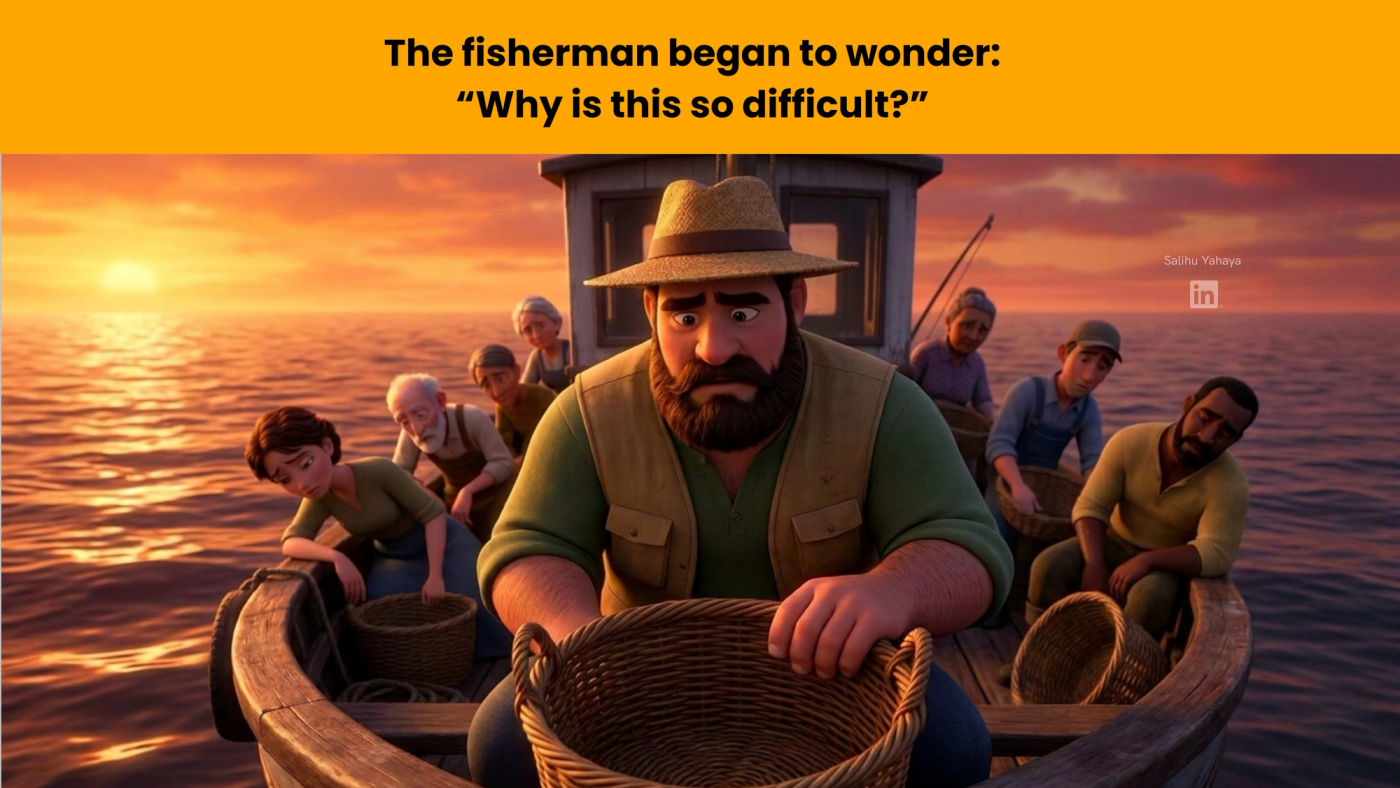
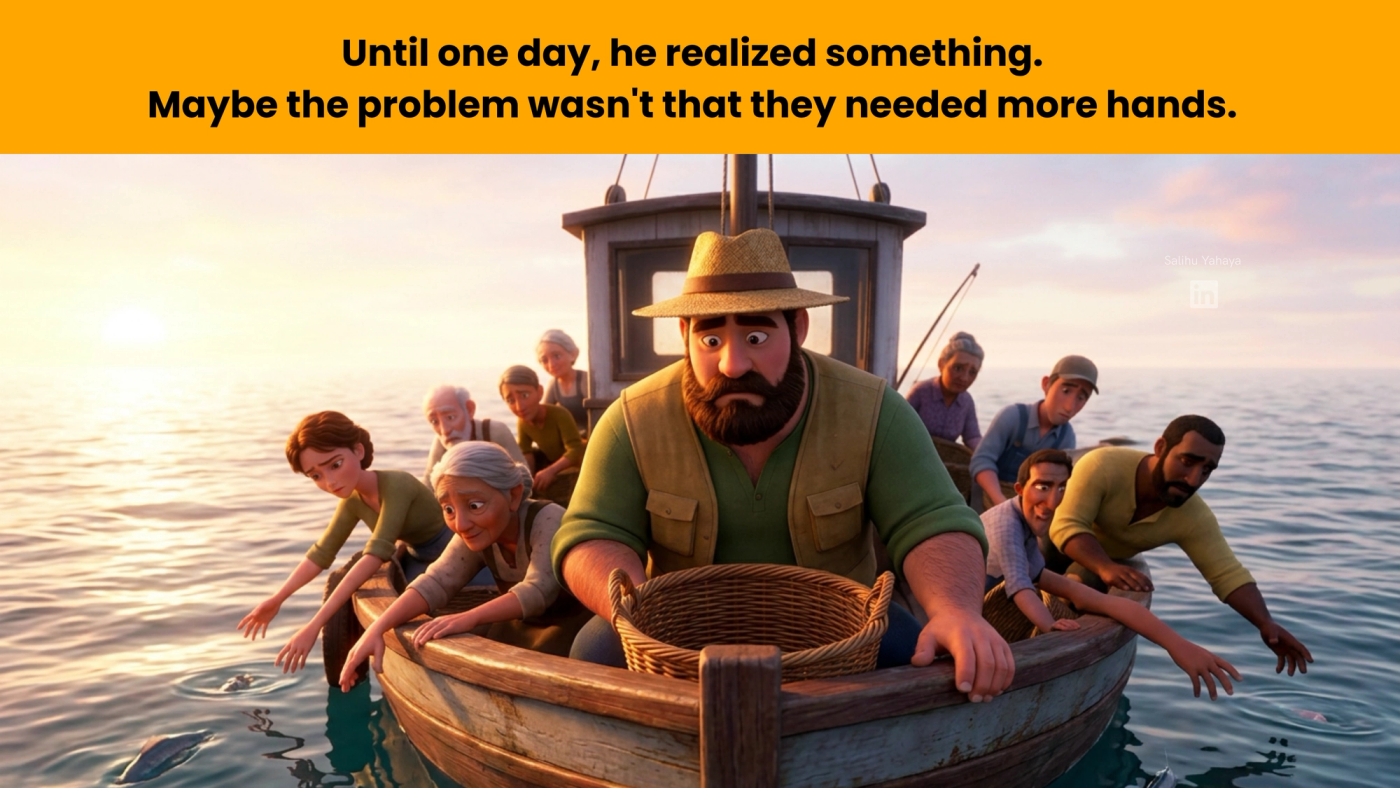
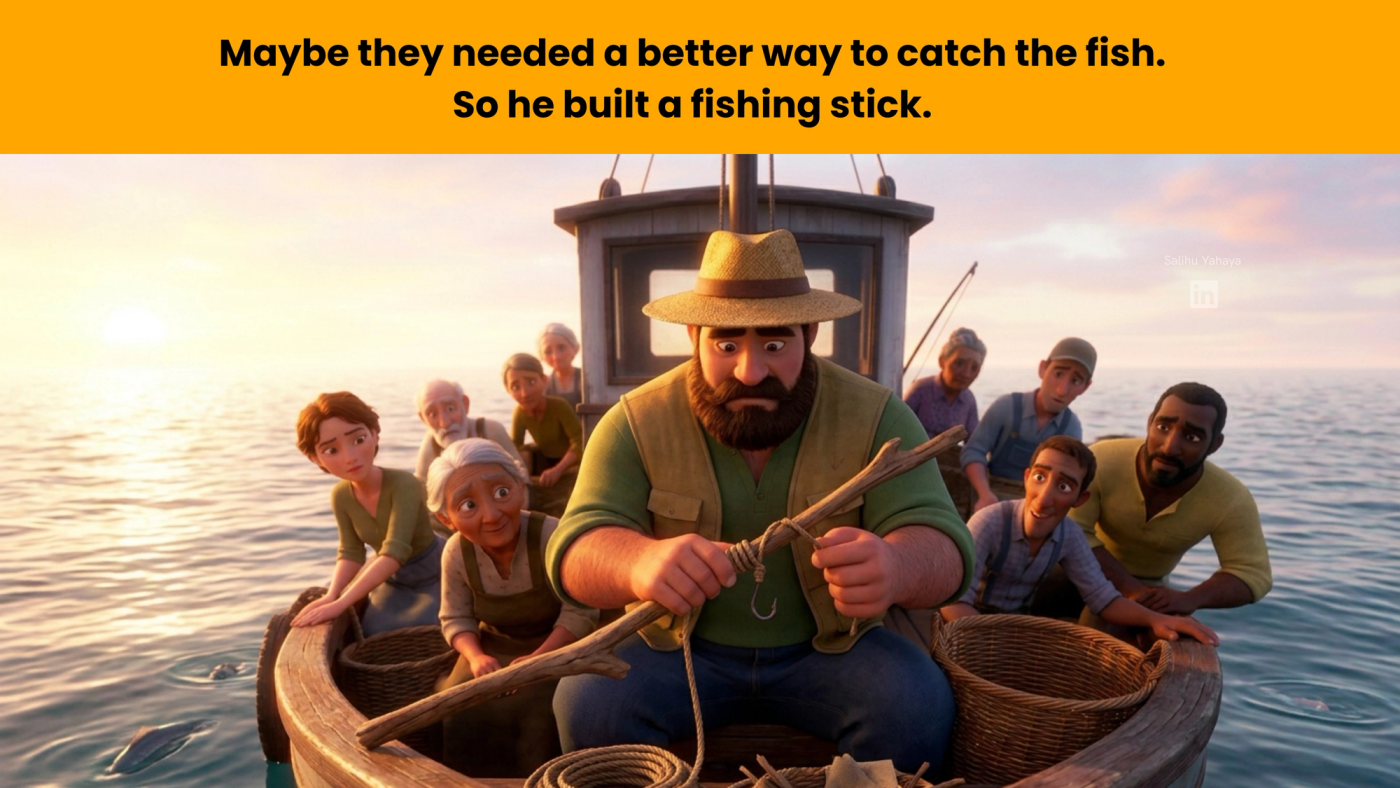


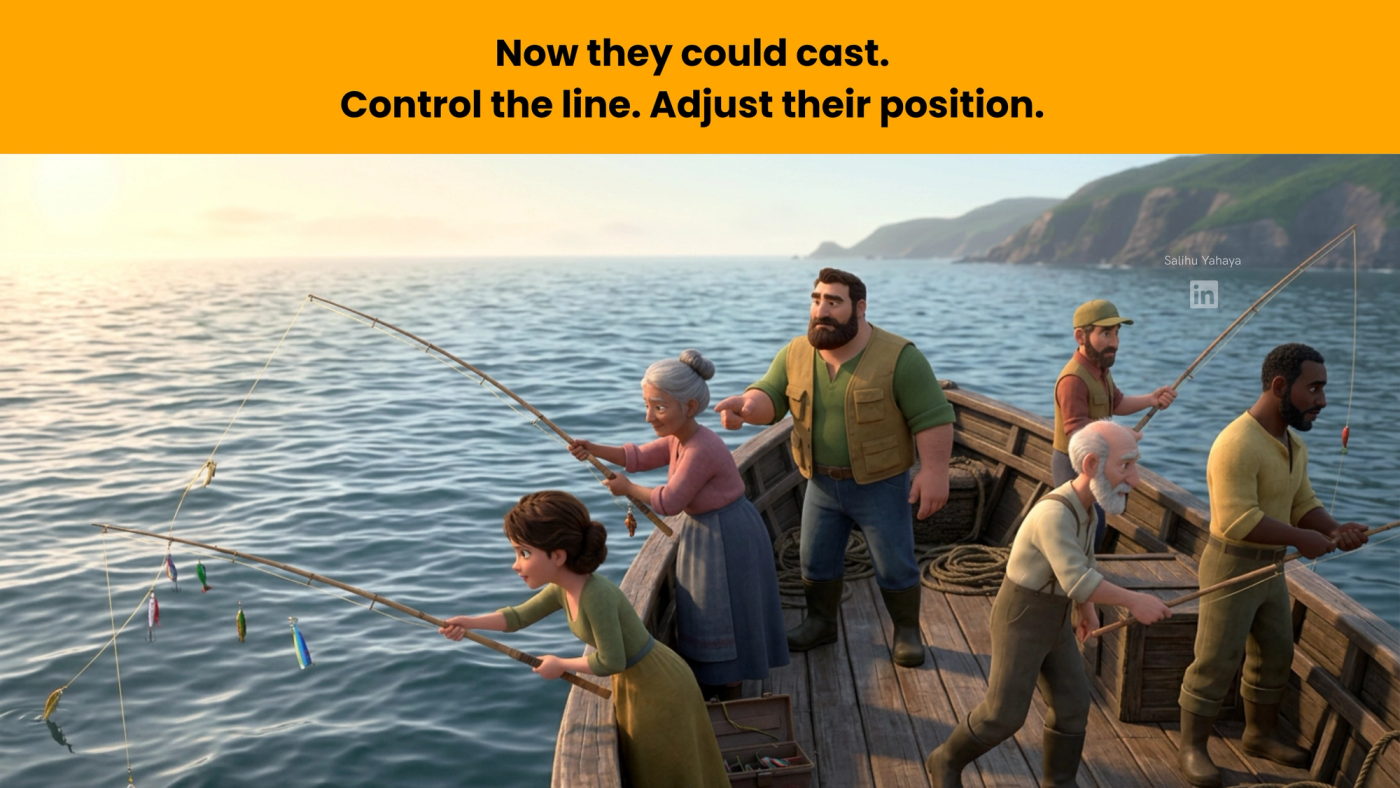


🎣So what do you think the fishing stick is?
Well, that’ll be Sight and sound.
Not because they're automatically “better senses.”
But because they're often more controllable channels for delivering information.
And so you can control what is shown, what is heard, control the duration, you can even pause, replay, adjust, design around it and that control matters.
Because the goal of instructional design isn't to use as many senses as possible. It's to make sure the right information gets through the right gateway, in a way that reliably serves the learning objective.
The fish haven't changed.
The fisherman hasn't changed.
The sea hasn't changed.
The method of catching the fish has.🎣
The problem isn't that smell and taste are “bad senses.”
Just like the fisherman and his group weren't bad at fishing because they were trying to catch fish with their bare hands.
The problem is that some tools make it harder to get the fish reliably into your hands.
And in learning, the “fish” is the information we're trying to get into the learner's experience.
And this is how I think about smell and taste in learning design.
They aren't useless as they create context, trigger memories and can make an experience more immersive.
But they're also highly individual, difficult to reproduce reliably, harder to make accessible, expensive and logistically awkward.
And
And sometimes...
they simply aren't necessary for the learning objective.
So the question isn't:
“Can I use smell or taste?”
The better question is:
“Does using this sense help me achieve the learning objective reliably?”
Because as instructional designers, we're not trying to use every tool available to us.
We're trying to choose the right tool for the job.
Sometimes the fish doesn't need another pair of hands.
It needs a fishing stick. 🎣
So Quinn isn't saying:
“Never use smell or taste.”
He’s saying:
Don't add sensory richness for its own sake, rather Add it only when the performance actually depends on that sensory capability.
And so being, the exception now becomes “the learning objective”
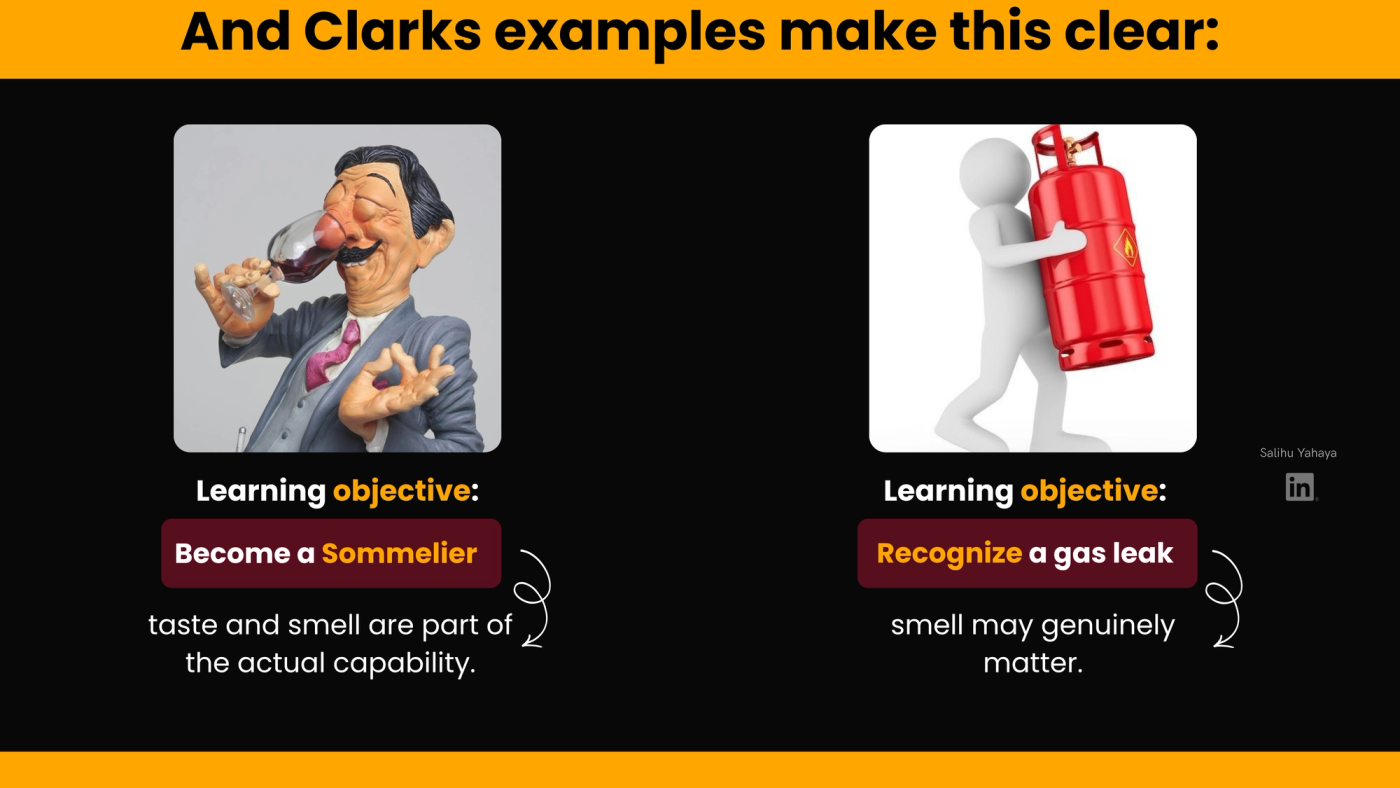
I recently learnt this from Clark Quinn when he spoke about smell and taste as gateways for learning being difficult and likely unnecessary additions to most learning programs.
Sitting with that statement gave me one key takeaway:
" The Use of a sense(gateway/channel) when the sense is the skill."
In other words, don’t add sensory richness for its own sake.
Add it when performance actually depends on that sensory capability.
Hopefully I’m making sense here. 😅
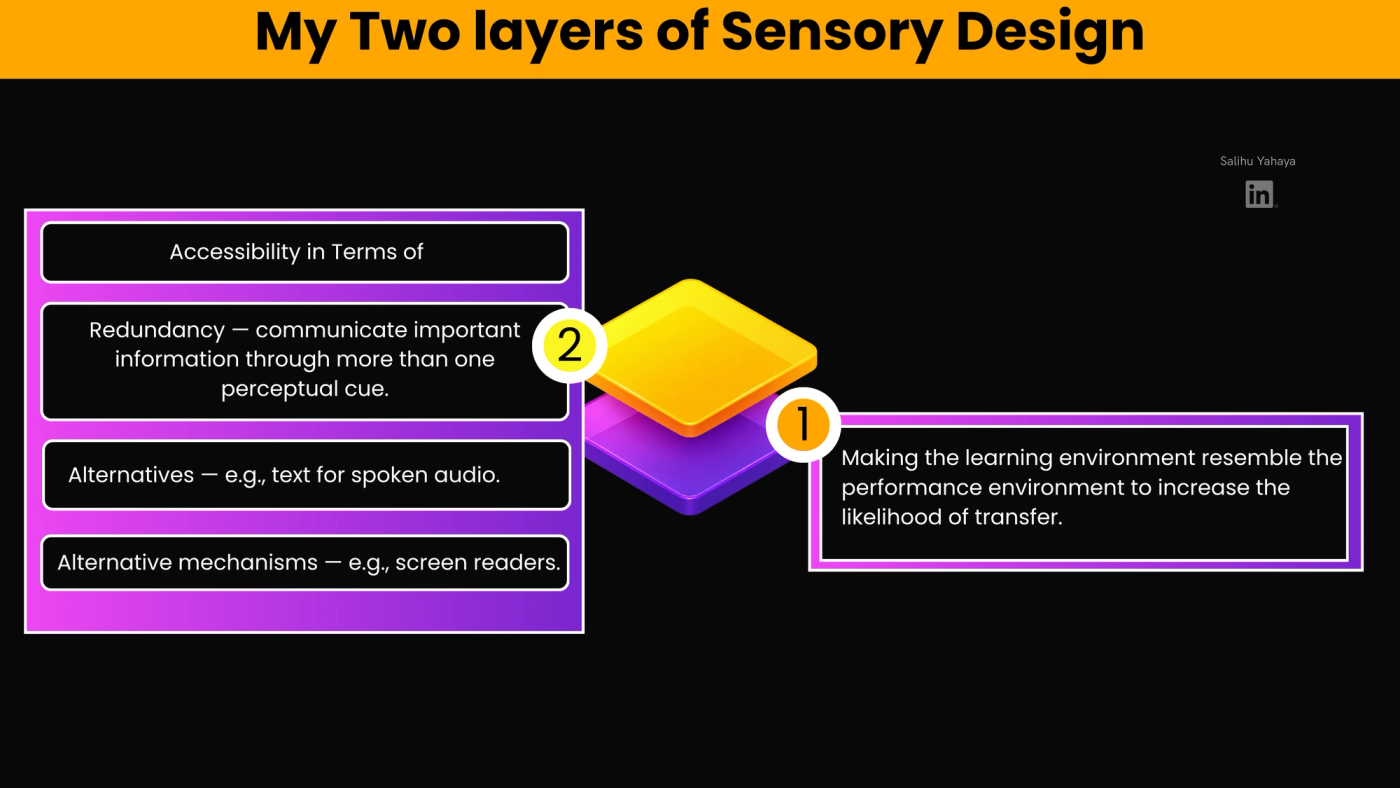
Accessibility becomes another layer
This becomes even more interesting when connected to all iv’e been saying above.
Clark reminds us that people don't all have identical sensory capabilities. He explicitly recommends considering limitations and providing:
- Redundancy— communicate important information through more than one perceptual cue.
- Alternatives— e.g., text for spoken audio.
- Alternative mechanisms— e.g., screen readers.
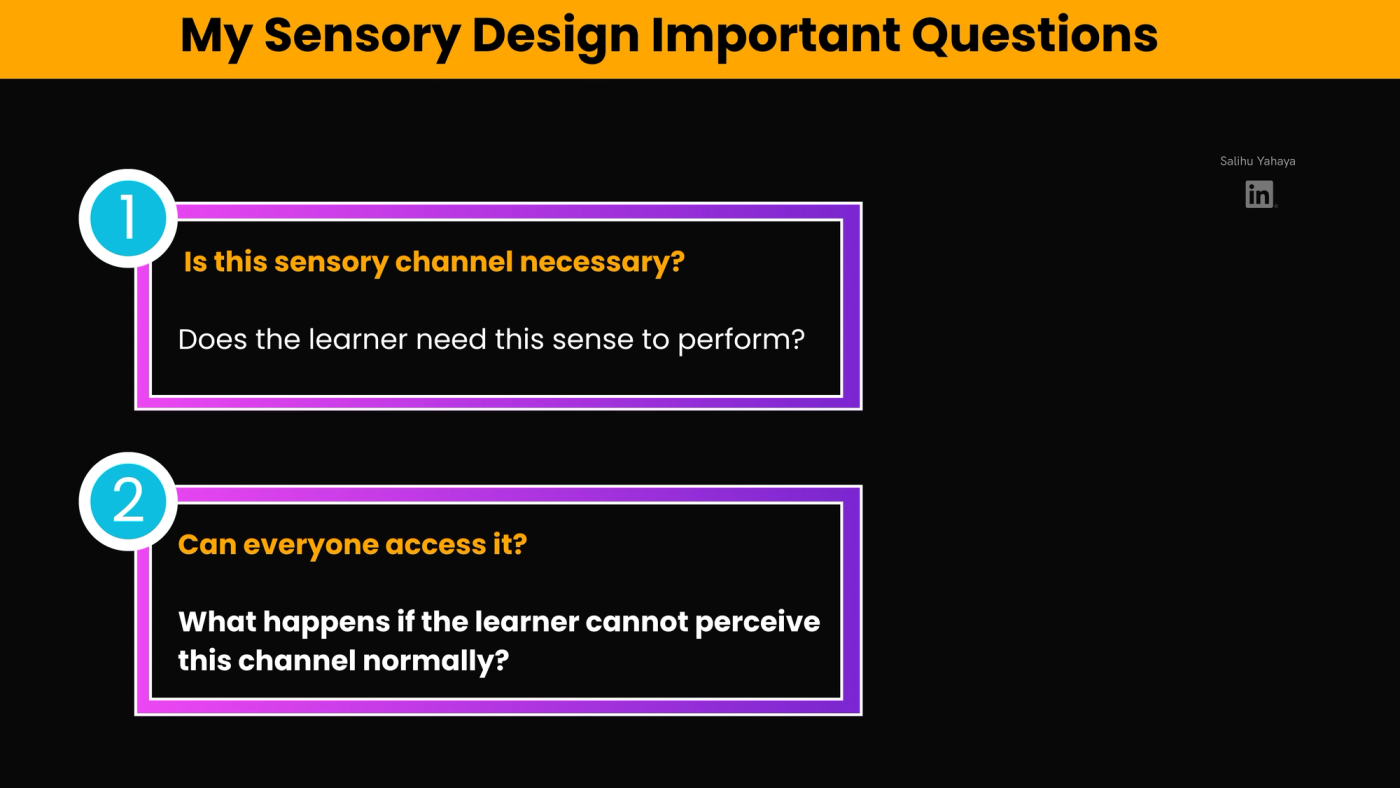
So sensory design hastwo questions for me:

What do you think?
#InstructionalDesign #InstructionalDesigner #LearningAndDevelopment #LearningDesign #LearningExperienceDesign #LXD #Elearning #ELearningDesign #CurriculumDesign #CurriculumDeveloper #LearningJourney #Day1 #Day2 #LearningInPublic #BuildInPublic #SenseMakingNotes #MentalModels #TAWIQM #QuinnSeeds
In case you missed the Quinn Seed articles 👇
Quinn Seed #1- CLICK ME
Where this comes from
- Check out "Learning Science" by Clark Quinn — If you design learning, teach, or train people, you need to understand what is actually happening when someone learns. Learning happens at the neural level, but we design for it at the cognitive level. There’s a lot more in Clark Quinn’s book that I can’t share because of **intellectual property**. Get the book and experience the learning yourself. 📚You Would Love It!
- Check out "40 L&D Stakeholder Challenges: Of L&D Leaders, Practitioners, Clients, and Learners" by Guy W. Wallace — This book shares the answers I got from my EPPI-PACT Guidance Bot. The free EPPI-PACT Guidance Bot is a digital, interactive knowledge-transfer resource designed to help Learning and Development (L&D) practitioners, performance consultants, and business leaders master and apply Guy W. Wallace’s Performance Improvement and Performance Based L&D methodologies.
- To Learn More Join the "Learning Development Accelerator" — Click the link to join the Amazing Learning Development Accelerator Group Where practice meets evidence