- Home
- Learning in public
- Sense-making notes
- Taking a Walk In Quinn's Mind
- Quinn Seeds
- A Clean Learning Experience Can Still Make Your Learner Look in the Wrong Place
Having understood Quinn Seeds 1 and 2, Quinn Seed 3 is somewhat of a practical microscopic learning experience surgery, to really help guide our learner. But because there is quite a lot to break down in my own words, let’s take it in bits.
Clark started by saying:
We need to help learners focus.
And with what we know about attention that it is largely volitional but not fully under our control as we may assume, when our sensory input takes in everything it comes across through its appointed sensory gates, we as instructional designers still have to help our learners focus on what we allow them to take from their sensory store into their working memory.
And Clark gave us the very first way to do so, which is, as I quote directly from him:
Remove distractions that can add to cognitive load.
You see, attention is like a torchlight, and our learners can have only one flashlight, while the learning environment is full of things competing for its beam.
And how I see this is: the similitude of how large and fleeting our sensory store is, and how everything can call our attention to it unless removed, is like a boy walking into a showroom full of posters on a huge wall and expecting himself to only look at one poster without other posters calling his attention. It’s almost close to impossible.

And since our attention is like a torchlight, he can’t flash it on every poster at the same time. But because a showroom is designed to have different art pieces competing for our attention, and isn’t designed to keep our attention focused on one thing, we’d literally not be able to pay attention to everything at once. And even if we tried to, we may only get overwhelmed.
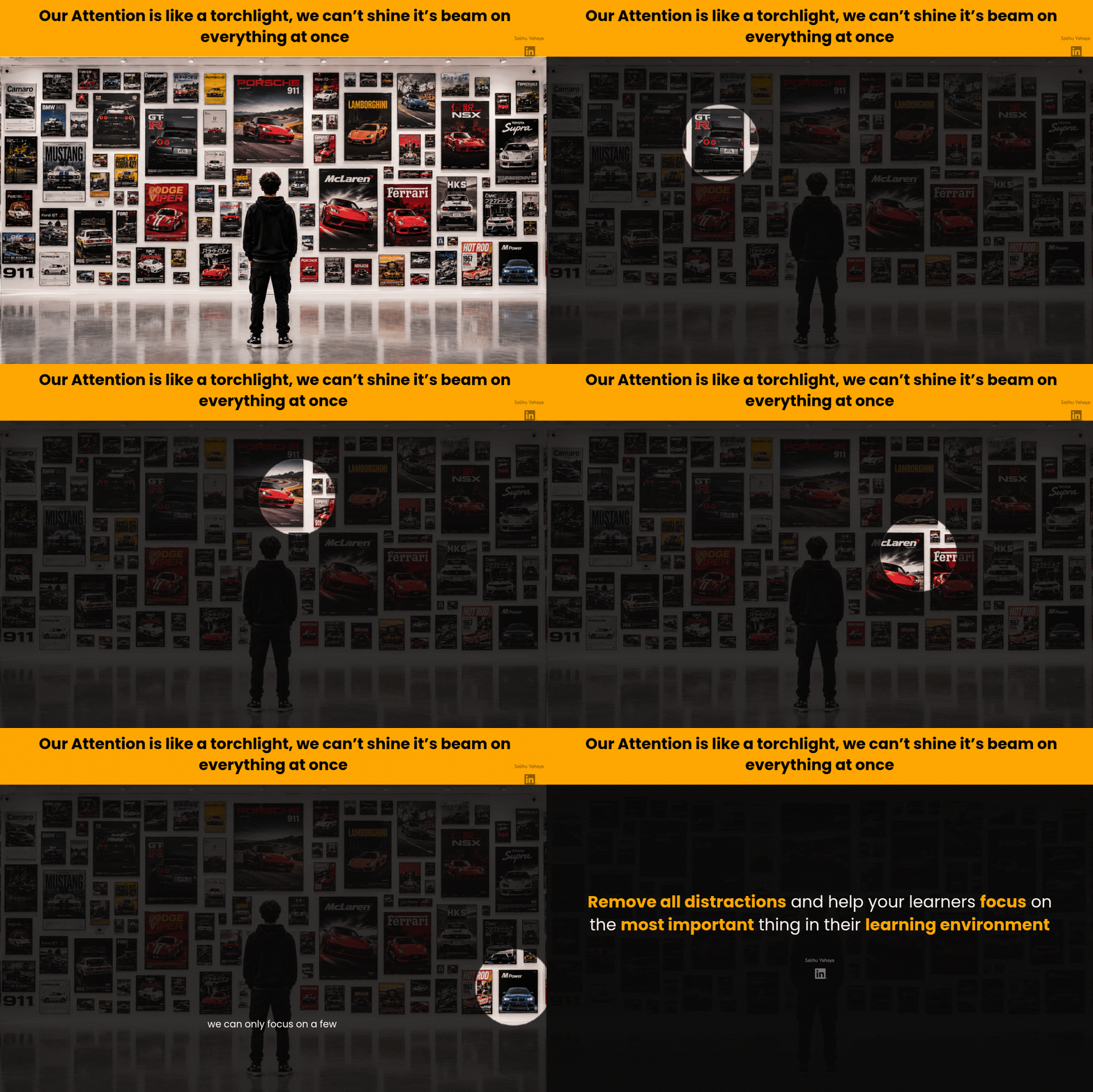
Being overwhelmed here can translate into increased cognitive load in learning science.
Having a lot of things before us makes it harder for us to attend to the right thing.
Let’s use a simple analogy of a boy looking at a wall full of posters, in contrast with the same boy looking at a wall with only a single poster.
Do you agree with me that BOY1 will have a harder time focusing on one poster than BOY2, who only has one poster to attend to?
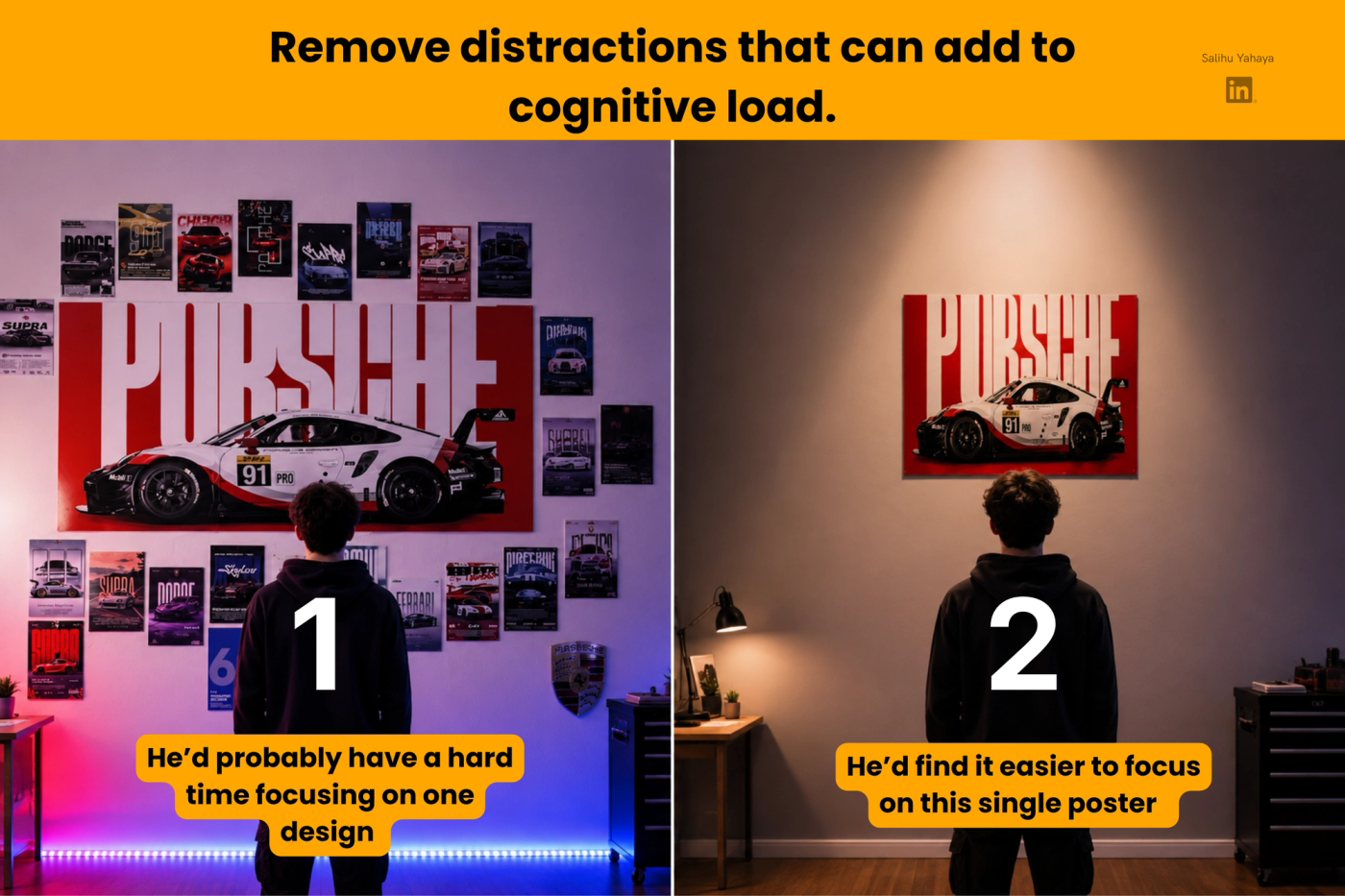
This is what Clark meant by removing distractions.
For example, introducing a procedure, background music and sounds, flashy animations, unnecessary notifications, a stressful countdown timer, and irrelevant information all in one learning environment can ruin the purpose of the experience itself.
And because there is no such thing as multitasking when it comes to attention, but rather attention switching, when there is too much for our learners to process all at once, we can create unnecessary demands on their cognitive processing.
I look forward to watching Matthew Richter’s upcoming video on cognitive load, to come back and edit part of this article with even more value about cognitive load.
So my key takeaway from the first sentence will be:
Protect your learners’ attention by removing distractions from the learning environment.
Get the processing down first, then add the noise
Secondly, Clark mentions in Quinn Seed 3:
If the ability to perform with noise or stress is part of the context, get the processing down first, then add in the extraneous factors.
This point should feel familiar if you’ve been following my posts.
I remember writing a post a week ago asking the question:
Will you consider the intentional use of spatial audio as a good practice for high-stakes environment reality-mirroring in learning experience design?
Clark commented and said
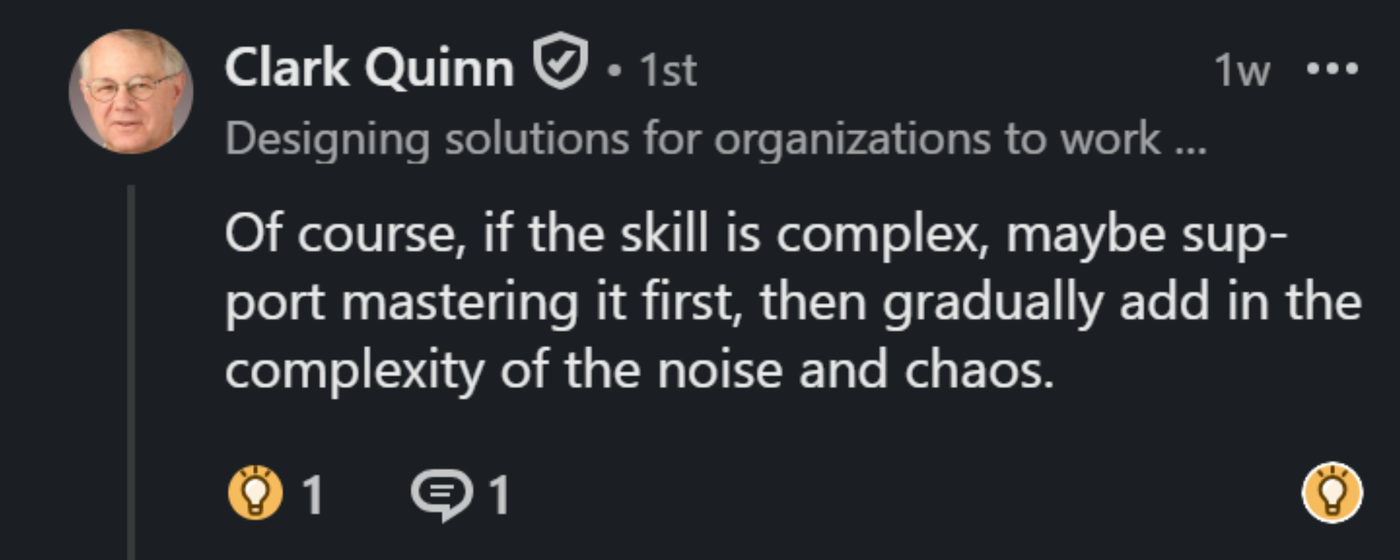
And I remember responding to him by saying that what he had just said is an invaluable gem.
And it actually reminded me of the idea of a spiral curriculum, where complexity is gradually introduced as the learner progresses. I think that applies beautifully here.
I don’t necessarily have to throw the learner straight into the full chaos of the real-world environment. I can start simple, let them first develop and master the core skill in a controlled environment.
Then, as their competence develops, I can gradually layer in the complexity of the real world: the competing sounds, distractions, time pressure, interruptions, and everything else they’ll have to contend with during actual performance.
So the sensory fidelity becomes progressive, rather than all-or-nothing.
So firstly, it’s: if my learner can perform the skill, then and only then should I be looking at them performing the skill when the environment starts behaving like the real world.
This distinction is really valuable, because it means I can use complexity not simply to replicate the real-world experience, but to progressively test and train performance under realistic conditions.
And so, for me, I’d simplify → so they master → then complicate.
I shouldn’t confuse realistic difficulty with productive difficulty.
Sometimes difficulty is necessary, but timing matters.
Directing attention, not just protecting it
And lastly, Clark mentioned in Quinn Seed 3:
Second, help learners direct their attention appropriately. Integrate labels into diagrams, and use pointers or spread out messages to introduce things one by one.
And this, to me, speaks about attention direction, because removing distractions isn’t enough.
This is the part I think can be easy to miss.
We can create a completely quiet, beautiful, distraction-free course, and the learner can still look at the wrong thing.
So applying Quinn Seed 3 to my learning experience design isn’t simply about not distracting my learner. It’s also about guiding the learner on where to look and what matters.
That’s why Clark recommends integrated labels, attention-guiding pointers, and sequencing of messages.
Integrating labels
Suppose you show a diagram where the labels sit outside the parts they name. The learner has to search: which label belongs to which part? They keep going back and forth, creating unnecessary cognitive processing just as demonstrated below.
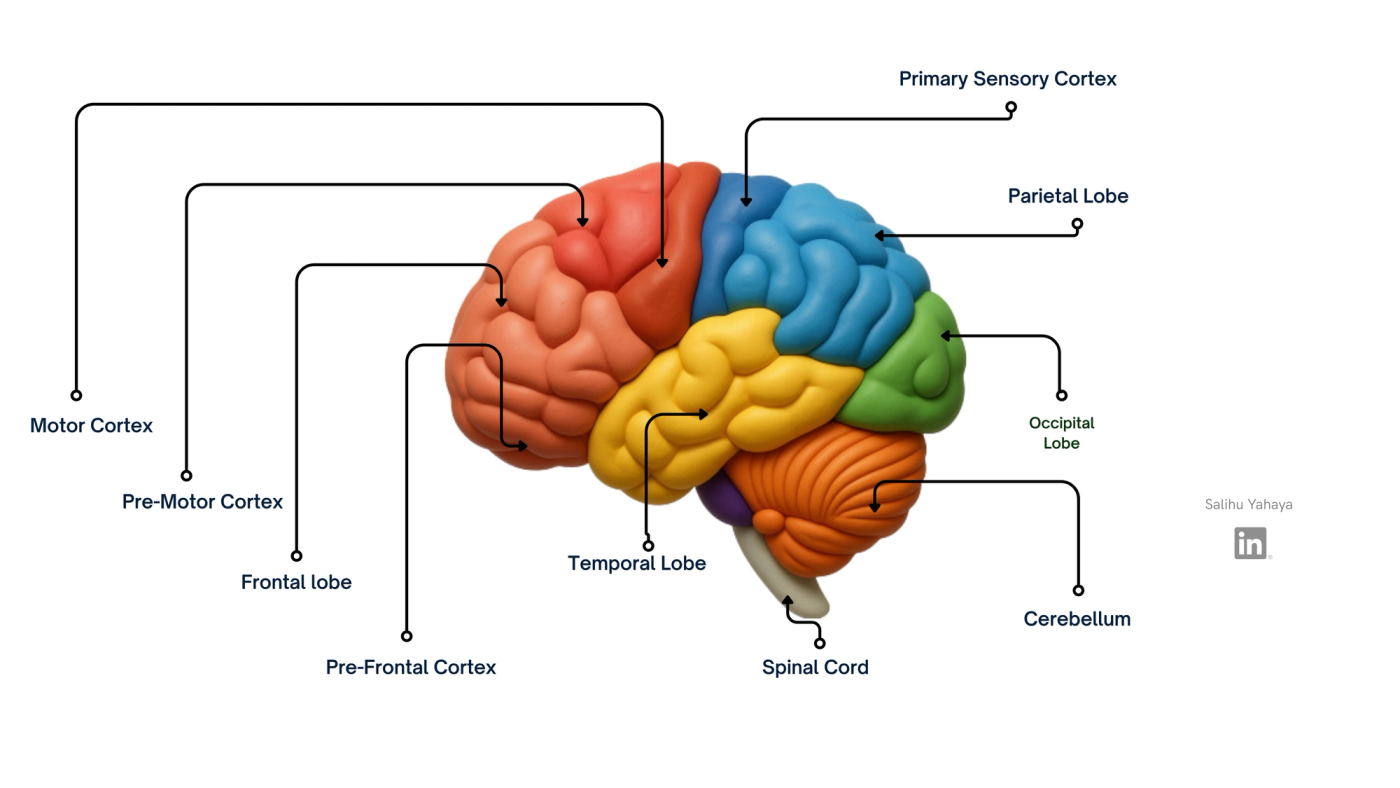
To fix this Put the label directly inside the relevant part, and you’ve guided attention , you’re reducing the amount of searching the learner has to do.

Attention-guiding pointers
I sent Clark a message to really understand more about this. What I learned surprised me, because I now learnt something about animations, and had a sneak peek into a concept called “build” (which I’ll share some other time).
So if I’m trying to guide my learner’s attention to a particular part on the screen, I could either use an actual arrow pointer that disappears, or builds as Clark taught me, to grab and guide my learner’s attention, or even a spotlight effect, to create what I’d call a microscopic focus.
And mixing this with good sequencing can be the icing on the cake for attention direction.
Alhamdulillah, this has been a normal practice of mine, but learning the science behind it would make me even more intentional with how I use these techniques in future projects.
One thing to note is that builds aren’t animations.
(Hopefully, in another post or article, I can share how Clark Quinn learned this powerful technique from Will Thalheimer )
Here are some of the ways I’ve used these seeds without knowing their effect:
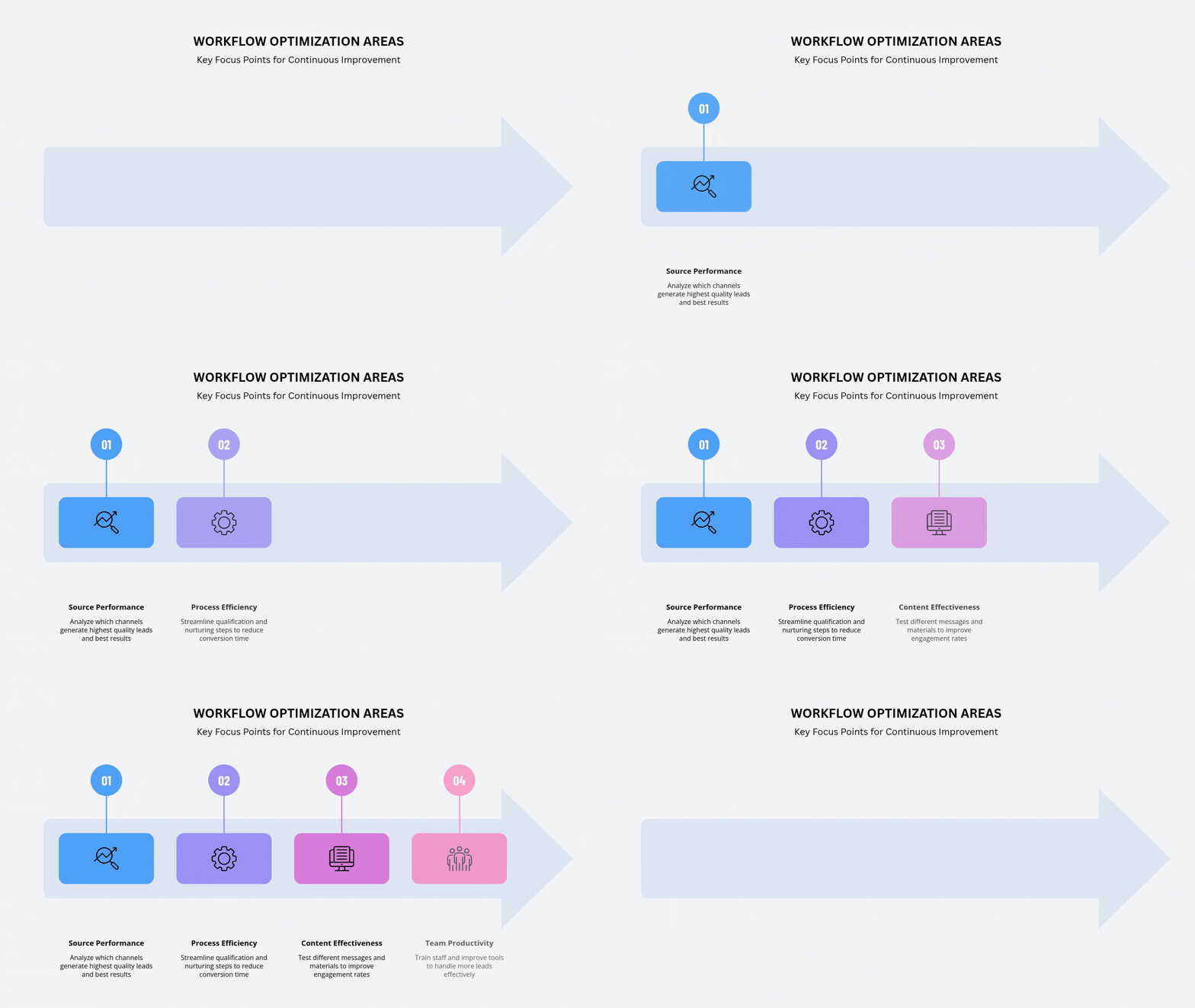
1.The reveal build, to capture attention as the learner progresses.
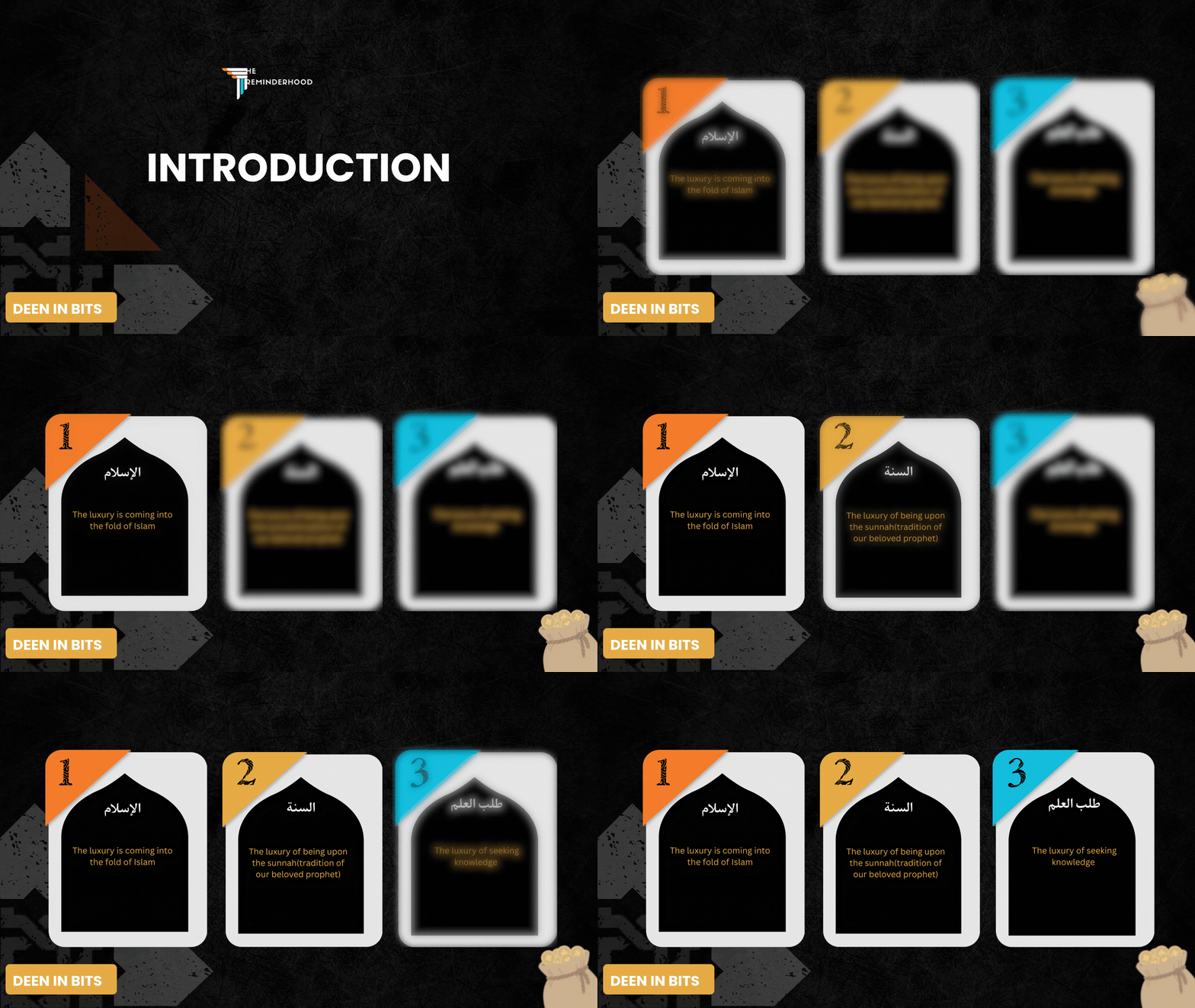
2.The build-and-blur effect, to reveal important information as the learner progresses.
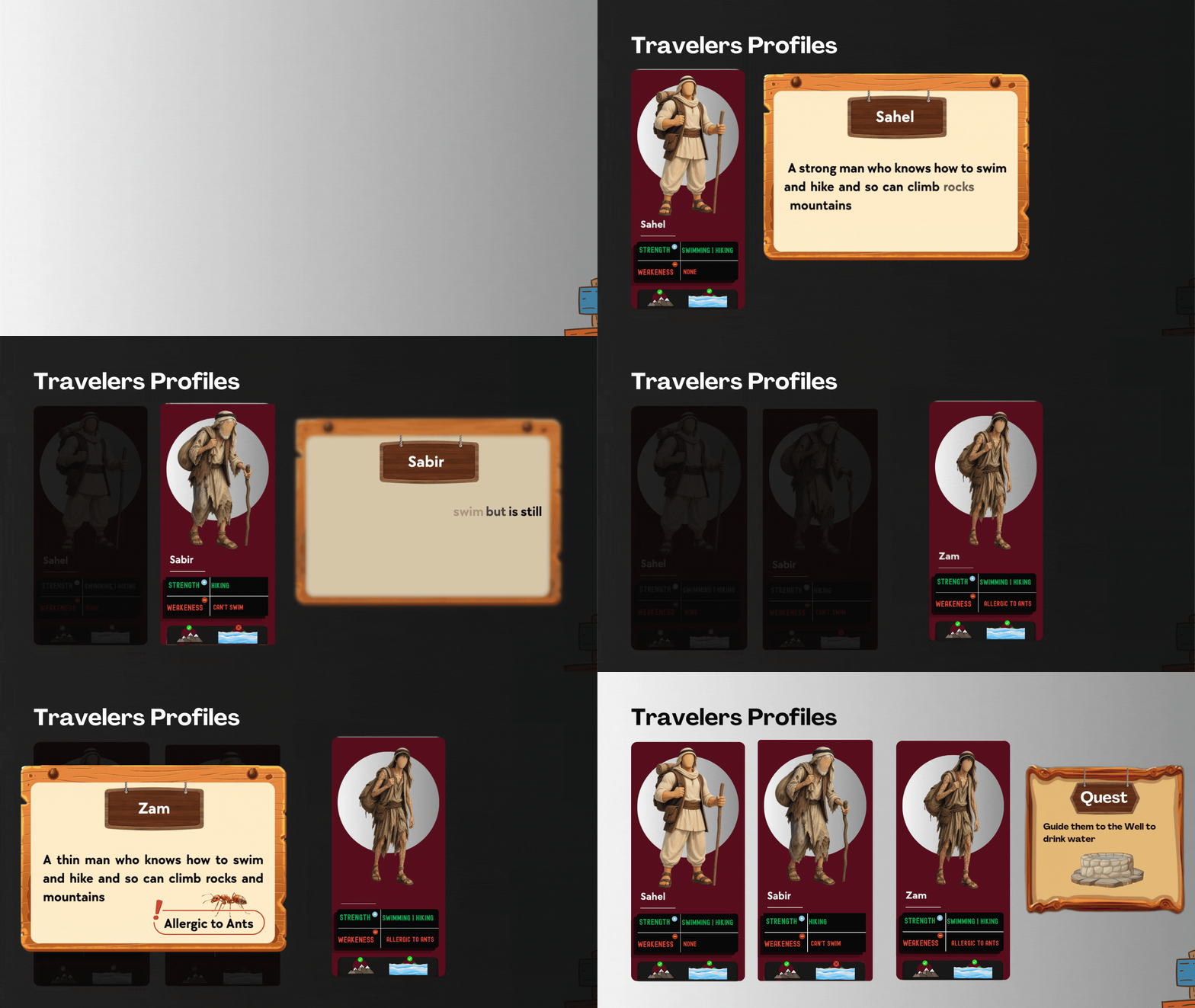
3.The build with subject focus and background effect, to keep the learner on the current information.
4.The build I may use to delve into a particular topic.

The Deeper Mental Model
I would turn Clark’s prescription into a useful learning experience design heuristic:
Attention design begins before the learner consciously thinks about the material.

A clean slide isn’t necessarily a good slide.
A good slide doesn’t merely have less stuff.
It should have a clear attentional target.
In case you missed the Quinn Seed articles 👇
Quinn Seed #1- CLICK ME
Quinn Seed #2- CLICK ME
Link to the post where i asked the Question relating to the use of Spatial Audio as a good practice for high stake environment reality mirror-ing in learning experience design As an expert,
< READ NOW >
Day 49 of Instructional Design
#InstructionalDesign#InstructionalDesigner#LearningAndDevelopment#LearningDesign#LearningExperienceDesign#LXD#Elearning#LearningInPublic#BuildInPublic#SenseMakingNotes#MentalModels#TAWIQM
Where this comes from
- Check out "Learning Science" by Clark Quinn — If you design learning, teach, or train people, you need to understand what is actually happening when someone learns. Learning happens at the neural level, but we design for it at the cognitive level. There’s a lot more in Clark Quinn’s book that I can’t share because of **intellectual property**. Get the book and experience the learning yourself. 📚You Would Love It!
- Check out "40 L&D Stakeholder Challenges: Of L&D Leaders, Practitioners, Clients, and Learners" by Guy W. Wallace — This book shares the answers I got from my EPPI-PACT Guidance Bot. The free EPPI-PACT Guidance Bot is a digital, interactive knowledge-transfer resource designed to help Learning and Development (L&D) practitioners, performance consultants, and business leaders master and apply Guy W. Wallace’s Performance Improvement and Performance Based L&D methodologies.
- To Learn More Join the "Learning Development Accelerator" — Click the link to join the Amazing Learning Development Accelerator Group Where practice meets evidence